Showing posts with label performance. Show all posts

Tuesday, September 25, 2012

How do we make these Social sites Green?

Long time back (Couple of years..) one of my colleague mentioned to me that every search on google generates enough heat that you can boil water for your cup of a tea.. I thought that he was joking or at least exaggerating..  but reading all this news.. doesn't surprise me that it was right information.

Worldwide.. Data Centers now consume around 30,000 MW at any point of time... Just for comparison, India's total power generation capacity must be around 200,000 MW.. California's total power generation capacity is around 70,000 MW (give and take 5-10K MW here and there..)..

Google alone consumes 300MW for their Data Centers(DC)/Server farms.. Poor Facebook.. just 60MW.

One MW is Mega Watt and equals to One Million Watts. Your iPhone charger consumes 5W when charging your iPhone. MW or Mega Watt is common terminology for utility industry to calculate generation capacity or consumption capacity.. either way they are more or less same as you really can't store electricity at this level. Now a days we have started using GW (Giga Watts) which is equal to 1000 MW or one Billion Watts. that means.. that you can charge 200 Million iPhones in 1000MW :-)

Okay.. back to main topic.. Agreed that Facebook, Gmail or Google search are as necessary as "Roti", Kapda" & "Makaan" (Food, cloth and house). and this is the reason.. all these big data center monsters are not only consuming 30K MW all the time but also wasting almost 90% of their capacity in anticipation of surge in demand or in anticipation that grid will fail and there will be power outage which will make their site down.. Mostly for user's like you and mine's satisfaction!!! or in other words to protect their reputation!! Nobody wants news that their web site was down for this many hours or slow today.. etc..

First of all, I think, this claim of 90% wastage.. I think it is way to exaggerated.. I agree.. There is lot of wastage but I don't think that it will be close to 90%.. Still.. there is no smoke without fire.. so let us assume that there is 50-60% wastage.. Which is still huge.. 15,000 MW!!!

Then secondly, can we do something to cut down this wastage. As per these Data Center / Server Farm Monsters.. all this wastage is for me.. and bad news is that these guys have made me addicted to instant web/information so much that I can't live without it.. I can try to cut it down or go on web diet.. That will make some dent or not.. not known.. but definitely.. if every one decides.. then it will.. I will be boiling lesser number of tea pots.. Honestly, I don't think that it will be possible to cut my Google/Facebook usage... they have become more or less my lifelines.. (that was too much..). but I can try..

Lastly, major reason for all this high level of consumption and this alleged wastage is that service level expectations for me as an user are really high.. do I care if Google returns search results in some 0.0003 seconds (just kidding) or whatever number they show.. or do I care if FB page loads slightly slower or shows my friend's updates in 10 minutes instead of 0.0000000004 seconds (again just kidding..).. What will happen if Google or FB or other such  monsters give me option of being "Green User" I get classified for most of my work in Green category which could have SLA issues here and there and instead of returning search results in 0.0003 seconds can return results in 0.3 or even 3 seconds... or at least wait for me to completely type my search request instead of searching for each and every letter I type and thus boiling a whole barrel of water instead of a tea pot..

I won't mind these SLAs.. I waste enough time all around here and there and I could be fine.. If I am under pressure to perform.. rarely but possible.. then I should be able to change my profile from Green to Red Hot user who would like super fast response like I get today..

They can give me some kind of special green badge (the kind of green ranger badge kids get in yosemite national park for attending some environmental session by rangers ;-) ) in lieu and I can proudly use it in my email signature to let the world know about it.. so that the world would stop expecting immediate email response or immediate FB like or comment on their post!!!

Let me know what all you guys think about it.. I was thinking about this article for couple of days and wanted to write it so it comes out effective. I tried my best to keep it simple and humorous where possible..

depending upon the response from web (It is okay if we boil few more barrels of water.. we will save some tankers later on..), I was thinking that we can start some Google+ or FB+ page for this cause and start some awareness.. so we can get some kind of petition for Google and FB and other web monsters to start some kind of "Green User" concept who will not complain of average or below average SLAs for their services as long as this user is not part of this wasteful Data Center (DC) or Server Farm.

I will be happy on some kind of green and energy efficient server farm or data center, where electricity is consumed to serve but wastage is significant lower.. I will take little bit of performance hit on my side.. I am sure.. with technological advancements.. this will be a short lived  process.. Very soon DC technologies will improve significantly where they can add or reduce computing capacity on demand without significant hit on performance SLA.

But for the time being.. I am ready to take this hit.. are you joining me in this?


DATA CENTERS’ DIRTY SECRET

Wasting electricity 24/7


Server farms run full-bore even when demand is low


By James Glanz


New York Times


SANTA CLARA — Jeff Rothschild’s machines at Facebook had a problem he knew he had to solve immediately. They were about to melt.

The company had been packing a 40-by-60-foot rental space here with racks of computer servers that were needed to store and process information from members’ accounts. The
 electricity pouring into the computers was overheating Ethernet sockets and other crucial components.

Thinking fast, Rothschild, the company’s engineering chief, took some employees on an expedition to buy every fan they could find — “We cleaned out all of the Walgreens in the area,” he said — to blast cool air at the
 equipment and prevent the website from going down. 


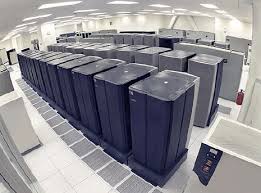
The number of data centers is surging.

Google alone uses 300 million watts.


RICHARD PERRY/ NEW YORK TIMES ARCHIVES

=========================================================================

That was in early 2006, when Facebook had a quaint 10 million or so users and just the one main server site. Today, the information generated by nearly 1 billion users requires outsize versions of these facilities, called data centers, with rows and rows of servers spread over hundreds of thousands of square feet, and all with industrial cooling systems. 

They are a mere fraction of the tens of thousands of data centers that now exist to support the overall explosion of digital information. Stupendous amounts of data are set in motion each day as, with an innocuous click or tap, people download movies on iTunes, check credit card balances on Visa’s website, send Yahoo email with files attached, buy products on Amazon, post on Twitter or read newspapers online. A yearlong examination by The New York Times has revealed that this foundation of the information industry is sharply at odds with its image of sleek efficiency and environmental friendliness. 

Most data centers, by design, consume vast amounts of energy in an incongruously wasteful manner, interviews and documents show. Online companies typically run their facilities at maximum capacity around the clock, whatever the demand. As a result, data centers can waste 90 percent or more of the electricity they pull off the grid, the Times found. 

To guard against a power failure, they further rely on banks of generators that emit diesel exhaust. The pollution from data centers has increasingly been cited by the authorities for violating clean air regulations, documents show. In Silicon Valley, many data centers appear on the state government’s Toxic Air Contaminant Inventory, a roster of the area’s top stationary diesel polluters. 

Worldwide, the digital warehouses use about 30 billion watts of electricity, roughly equivalent to the output of 30 nuclear power plants, according to estimates industry experts compiled for the Times. Data centers in the United States account for onequarter to one-third of that load, the estimates show. 

“It’s staggering for most people, even people in the industry, to understand the numbers, the sheer size of these systems,” said Peter Gross, who helped design hundreds of data centers. “A single data center can take more power than a medium-size town.” 

Energy efficiency varies widely from company to company. But at the request of the Times, the consulting firm McKinsey & Co. analyzed energy use by data centers and found that, on average, they were using only 6 to 12 percent of the electricity powering their servers to perform computations. The rest was essentially used to keep servers idling and ready in case of a surge in activity that could slow or crash their operations. 

A server is a sort of bulked-up desktop computer, minus a screen and keyboard, that contains chips to process data. The study sampled some 20,000 servers in about 70 large data centers spanning the commercial gamut: drug companies, military contractors, banks, media companies and government agencies. 

“This is an industry dirty secret, and no one wants to be the first to say mea culpa,” said a senior industry executive who asked not to be identified to protect his company’s reputation. “If we were a manufacturing industry, we’d be out of business straightaway.” 

These physical realities of data are far from the mythology of the Internet: where lives are lived in the “virtual” world and all manner of memory is stored in “the cloud.” 

The inefficient use of power is largely driven by a symbiotic relationship between users who demand an instantaneous response to the click of a mouse and companies that put their business at risk if they fail to meet that expectation. 

Even running electricity at full throttle has not been enough to satisfy the industry. In addition to generators, most large data centers contain banks of huge, spinning flywheels or thousands of lead-acid batteries — many of them similar to automobile batteries — to power the computers in case of a grid failure as brief as a few hundredths of a second, an interruption that could crash the servers. 

“It’s a waste,” said Dennis Symanski, a senior researcher at the Electric Power Research Institute, a nonprofit industry group. “It’s too many insurance policies.” At least a dozen major data centers have been cited for violations of air quality regulations in Virginia and Illinois alone, according to state records. Amazon was cited with more than 24 violations over a three-year period in Northern Virginia, including running some of its generators without a basic environmental permit. A few companies say they are using extensively re-engineered software and cooling systems to decrease wasted power. Among them are Facebook and Google, which also have redesigned their hardware. Still, according to recent disclosures, Google’s data centers consume nearly 300 million watts and Facebook’s about 60 million watts. 

Many of these solutions are readily available, but in a risk-averse industry, most companies have been reluctant to make wholesale change, according to industry experts. Improving or even assessing the field is complicated by the secretive nature of an industry that is largely built around accessing other people’s personal data. 

For security reasons, companies typically do not even reveal the locations of their data centers, which are housed in anonymous buildings and vigilantly protected. Companies also guard their technology for competitive reasons, said Michael Manos, a longtime industry executive. “All of those things play into each other to foster this closed, members-only kind of group,” said Manos, now a senior vice president for technologies at AOL. 

That secrecy often extends to energy use. To further complicate any assessment, no single government agency has the authority to track the industry. In fact, the federal government was unable to determine how much energy its own data centers consume, according to officials involved in a survey completed last year. The survey did discover that the number of federal data centers grew from 432 in 1998 to 2,094 in 2010. 

To investigate the industry, the Times obtained thousands of pages of local, state and federal records, some through freedom of information laws, that are kept on industrial facilities that use large amounts of energy. Copies of permits for generators and information about their emissions were obtained from environmental agencies, which helped pinpoint some data center locations and details of their operations. In addition to reviewing records from electrical utilities, the Times also visited data centers across the country and conducted hundreds of interviews with current and former employees and contractors. 

Some analysts warn that as the amount of data and energy use continue to rise, companies that do not alter their practices could eventually face a shake-up in an industry that has been prone to major upheavals, including the bursting of the first Internet bubble in the late 1990s. “It’s just not sustainable,” said Mark Bramfitt, a former utility executive who now consults for the power and information technology industries. “They’re going to hit a brick wall.” 


STEVE DYKES/NEW YORK TIMES ARCHIVES 

A row of backup generators, inside the white housings, line the back exterior of the Facebook data center in Prineville, Ore. They’ll keep servers on in a power outage. 

Wednesday, July 25, 2012

Will Netflix come out of this mess?

I think Netflix needs to take some corrective actions before they plunge too deep in financial mess. Actually lot of it was already projected due to expansions in newer markets. What is new is slow growth rate of new subscribers and bigger attrition of DVD-by-mail business.

In my view they should do following tactical initiatives while they continue to focus on bigger grander vision of providing entire world with all the possible media streams..

  1. New Class of Subscribers - Get more subscribers in College campus by limiting not only number of simultaneous streams any account can view but also, limit the number of different locations simultaneous or otherwise.. That should stop account sharing in college campus and will force lot of new subscribers. $10/month is not a big deal for college grads it is just that it is so easy to share Netflix account it simply doesn't make any sense to pay. Disclaimer: this is based on the rumors I have heard. I haven't actually seen it yet. They can easily do it by minor enhancements on tracking IP address of clients and possibly some other ways as well.. 
  2. Roam-ability - It is big bummer that when you travel, you can't watch Netflix as you are outside US. They should give some kind of ability to select portable devices of users to be able to view content while traveling outside US. They can charge little bit of premium for it or not.. At least I won't mind paying few extra bucks if they let me watch it on my laptop while I am travelling international. Though, I don't know how many users will care about this feature.. but definitely, it will remove big pain point for many. 
  3. They need to stop treating DVD by mail as second class citizen in their company. It was their foundation and still is a great cash cow for them. Nobody treats your "Present" so bad for the sake of better "Future". As long as it doesn't generate loss for them, they should continue to push it harder. I would still love to have DVD by mail service. It was so convenient and you could watch lot more and better movies at better quality without worrying about internet speed or while traveling or camping or anything..  Netflix is in Media Streaming business.. they shouldn't care about Physical Media.. They did grave mistake of first offering streaming for free to DVD by mail customers and then start charging it separately. At least I can't understand it.. They could have created separate category of Premium streaming or some other category.. They could have stopped adding more content in this free version of streaming to push their premium Streaming version or they could have simply hiked prices like a dollar or two.. but that was ridiculous thing they did.. okay.. it was done.. but still before they go to graveyard.. they can rectify and come up with better DVD by mail plus streaming option with mid point pricing of yesterdays and today.. 

Netflix is great company and in all probability they will survive this storm. I can't predict if this is right time to buy their stock or sell. But they will be there for sure.. Question is, will they thrive like old days or just survive and grow slowly to be ultimately eaten up by some other big fish..


STOCK PLUNGES

Investors punish Netflix’s Q2 results


Subscriber growth less than projected, outlook may point to losses


By Troy Wolverton


LOS GATOS — Netflix’s stock plunged more than 16 percent in late trading Tuesday after the company posted weak subscriber growth and warned of future losses that call into question analysts’ forecasts for next year.

As part of its second-quarter report, which included a 91 percent drop in earnings, the Los Gatos company warned that it may not meet its previously stated goal of adding 7 million new U.S. streaming video subscribers this year, after adding a paltry 530,000 new subscribers in the second quarter. The company also warned that it might post losses in both its third and fourth quarters thanks to a costly international expansion of its streaming video business.

Thanks to those losses, Netflix’s bottom line is likely to finish somewhere around break even for the year, said Michael Pachter, a financial analyst with Wedbush Securities. Meanwhile, the company continues to lose subscribers to its DVD-by-mail business, which provides the bulk of its profits.

Combine those two factors, and it’s unlikely that the company will meet Wall Street’s expectations of a $2.13 per-share profit for next year, Pachter said. And if it can’t hit that target, its price has to come down, he said.

In after-hours trading, Netflix’s stock was down $13.39, or 16.7 percent, to $67.

“It’s becoming clear to people that $2 (profit) figure is fricking wrong,” Pachter said. “The company is overvalued. That’s why it’s down.”

The online movie company announced Tuesday it earned $6.2 million, or 11 cents a share, in its most recent quarter. That was down sharply from the $68.2 million, or $1.26 a share
 it earned in the same period a year earlier.


JUSTIN SULLIVAN/GETTY IMAGES ARCHIVES

Netflix profit fell 91 percent in the quarter, and it warned it may fall short of the 7 million new streaming customers it had projected for the year.

 --------------------------------------------------------------------------------------------------------------------------------------------------------------

But it was up from the first quarter, when the company posted a loss of $4.6 million, or 8 cents a share, a rare trip into the red for Netflix. 

The company’s sales in the second quarter were up 13 percent from the year-ago period to $889.2 million. 

The results topped Wall Street’s expectations. On average, analysts polled by Thomson Reuters were expecting the company to earn 5 cents a share in the quarter on sales of $888.9 million. 

But the company clearly faced challenges. Its international business posted an $89 million segment loss in the quarter, helping to bring down its overall results. Netflix also continued to shed DVD subscribers. The total number of DVD customers fell to 9.2 million by the end of the quarter, down 850,000 from the previous period. The company has lost about 5.8 million DVD customers since last summer, when it raised prices as much as 60 percent and announced — and then canceled — a move to rename and spin off that business. 

Despite those subscriber losses, Netflix’s DVD business posted a $133.8 million segment profit in the quarter. The U.S. streaming business, which now has 23.9 million customers, posted an $83.1 million profit. 

Netflix doesn’t include technology, development or administrative costs when it calculates the segment profits of its business divisions. If those costs are included, Netflix’s U.S. streaming business would probably show a minuscule profit, if it was able to show one at all, Pachter said. 

Netflix forecast that it would add 1 million to 1.8 million U.S. streaming subscribers in the third quarter but said that it would have to hit the top of that range to be on target for its annual goal. 

In a statement, CEO Reed Hastings and Chief Financial Officer David Wells touted the company’s return to profitability in the second quarter, noting that Netflix’s results exceeded the guidance they gave last quarter. They also argued that the company’s international expansion, which led to the company’s loss in the first quarter and could lead to losses in the next two quarters, is the best thing for Netflix’s long-term business. 

“We have enormous challenges ahead, and no doubt will have further ups and downs as we pioneer Internet television,” Hastings and Wells said in the statement. We are making progress in every market we serve, and see a oncein- a-generation opportunity ahead to build the world’s most popular TV show and movie service.” 

In the current period, the company expects its bottom line to range from a loss of $6 million, or 10 cents a share, to a profit of $8 million, or 14 cents a share. It forecast sales ranging from $890 million to $911 million. Before the report, analysts had forecast that Netflix would earn 11 cents a share in the third quarter on sales of $905.9 million. 

Contact Troy Wolverton at 408-840-4285. 


Sunday, July 15, 2012

Come on.. this is foundation of Capitalism..

Off course.. he is worth every penny.. He is managing world's most wanted and desirable and darling company.. why not.. he should be rewarded.. he has worked his butt off and ought to be rewarded. Also, most of the vesting is over a period of ten years.. which is fairly long term.. so he needs to keep company keep running really well in long term.. not just short term. I think each every share holder of Apple will be more than happy to pay him even double than what he has got if he can even maintain Apple stock to this level. Which I can guarantee, it won't be.. it will be back to some normal level by the end of ten years. Nature will take care of it.. nothing can keep on going for such a long time.. Apple will become some kind of normal company and some other company has to come up and take its place..

Bottom line, it is reward for performance and it ought to be good so that everyone really works hard to attain it. As long as company and shareholders are fine with the compensation (I mean they can afford it)..

All that charity and hourly rate and all of it is purely non-sense.. Biggest charity any CEO can do is to create jobs which will eventually create hundred or thousand times more value than just donating to feed or provide cloths..

In this case, as long as Tim or any other CEO keeps on creating jobs, he is already doing greatest charity to humanity already. We have seen effect of Charitable philosophies (namely communism) already.. we don't want to go back to it. Though, NO System is Perfect.. Performance and Reward for performance is best system we got and we need to preserve it..


Is Apple’s CEO really worth that much?

Staggering pay package is symbol of income inequality in country


The drinks are on Tim Cook.

$377,996,538. That’s how much the new Apple CEO made last year. That’s not how much he’s made in his lifetime. It’s not how much money his company made, though that would be a fine profit for a company. That’s how much he made in 2011, according to this newspaper’s annual What the Boss Makes survey. More than a million dollars a day. Roughly, $43,151 an hour. About $57,534 for every hour he was awake (figuring he gets six hours a night). If he took his pay in $1 bills, it would weigh 417 tons. He could buy 757,515 iPads (not counting
 the employee discount). He’d have to spend it at a rate of $719 a minute to burn through his pay in a year.

To put Cook’s pay package, the highest in the valley, in perspective: It’s really, really a lot.

A caveat: All but about a couple million of Cook’s 2011 pay was in Apple stock that vests over 10 years. So, if he leaves the company, depending on when he leaves the company, he might not see it all. But don’t feel too bad.

If he stays and the stock keeps rising (it’s already within striking distance of doubling since it was granted) he’ll make even more than $378 million for the year.

The putting in perspective seems to get harder each year. Cook is by no means the first valley CEO to need a
 supertanker to get his paycheck home. Nine-figure pay packages are common enough that they barely make a splash in Silicon Valley. After all, this place is all about money. It’s how we keep score. And for those keeping score at home, last year’s No.1, Oracle’s Larry Ellison, is now No.2. He’s stuck in the $70 million-plus range, similar to last year. 

Maybe we should make Ellison an honorary member of the 99 percent, given that his wages have stagnated. 

OK, I admit it. I enjoy having a little fun at the expense of the rich. They can afford it after all. But there is a serious side to all of this. In some ways the valley’s gargantuan pay packages are a symbol of the growing divide between the rich and the rest who live in this country. 

I’ve written about this issue before and when I have, my email has included notes that say I must hate the rich. (I don’t.) Or that I must believe that when it comes to pay, there is a point where enough is enough. (I might.) But the real reason I think this is worth talking about is that the growing disparity between the rich and those who are middle class or poor is a cause for concern. 

Consider that between 1988 and 2008, according to the Internal Revenue Service, the inflation-adjusted income of an average taxpayer dropped by $400, to $33,000. During the same time, the richest 1 percent, those who make $380,000 or more, saw their incomes increase by 33 percent. 

Then consider that when the majority sees or senses that the game is rigged against them — that opportunity is much more available to a few, compared to the rest — it erodes trust. People no longer feel vested in our democracy and our common interests. Those who have worked hard, only to fall behind, become restless. 

“If you’re a CEO of one of the big 500 companies, you’re probably making as much in two or three hours as a normal wage worker is making in some cases in two or three years,” says Sister Nora Nash, a Philadelphia-area Catholic nun, who works with the Interfaith Center on Corporate Responsibility. “How can you morally look at your life and see how that is just?” 

I called Sister Nash, who’s taken on Goldman Sachs CEO Lloyd Blankfein among others, because frankly I was struggling. 

Something seemed inherently wrong with the notion that one person, whose company’s success relies on the work of hundreds of thousands of others around the world, should be paid nearly $400 million in a year. And, of course, the question goes well beyond Tim Cook. The What the Boss Makes survey is filled with executives who were paid far more than mere mortals would know what to do with. 

But what? What exactly is wrong with paying an executive more than the GDP of a small country? 

Sister Nash explained that the way she sees it, it’s all about keeping our communities from coming apart at the seams. 

“We look at the problem of the growing inequity here in this country and throughout the world,” she says. “And we say we really need to be working for the common good; and the common good of the human community is to bring about some sort of sustainability.” 

Instead, she says, more and more of the country is slipping into poverty. It’s a bleak picture, but Sister Nash is keeping the faith (occupational hazard). 

Highly paid CEOs have tremendous power and tremendous means to do good. She points to the philanthropy of Bill Gates, who was for years vilified as a stingy billionaire, and his wife, Melinda. 

“They’ve really taken the time to see what they can do to change the lives of people,” she says. 

And so, we can all hope that in time, Tim Cook and his fellow valley moguls will be popping for far more than a celebratory round of drinks. 

Contact Mike Cassidy at . 

com or 408-920-5536. 

Follow him at Twitter. 

com/mikecassidy. 


Thursday, July 5, 2012

Discounted MacBooks!!

Is it a good news or not? Though discounts are still very small and still keep MacBooks almost twice as expensive as similarly CONFIGURED Windows machine.. but then you need to compare Apple to Apple only.. This is definitely good news for consumers.. 


In general, MacBook's experience is all together different. Best part is that they don't slow down with age as in the case of Windows. Then on top of it, graphics rendering is amazing.. In general, I have observed that developer tools also perform much better on Mac as compared to Windows machine.  Boot up time or standby energy consumption is superb.. Windows 7 is also catching up but still no where near to Mac OS-X.


I do see lot more MacBooks in Starbucks and office places.. So it is proliferating which is one of the greatest news for Apple Inc. as Laptops and Desktops are highest margin products for them. Hope that with increased sales, Apple will work on pricing and make their products more affordable.

Cheers!!!


APPLE

Latest MacBooks available at discount


Best Buy, Amazon drop prices less than a month after devices debuted


By Salvador Rodriguez


Los Angeles Times


Best Buy and Amazon are discounting the latest MacBooks despite the Apple computers being on the market for less than a month.

The two retailers are offering discounts on their websites across the board on all 10 computers Apple announced at its Worldwide Developers Conference last month.

Although the two companies have similar discounts for all of the models, Best Buy beats Amazon, notably on the Retina models, in some instances.

Amazon takes off only $5 from the two Retina models, yet Best Buy knocks off $140 from the $2,799 Retina and $110 from the $2,199 model. But Retina models at Best Buy are back-ordered and could take a month to ship.

Best Buy also has a better deal on the $1,499 MacBook Air, taking off $75 while Amazon discounts only $5. However, each retailer has the same discount on the three other MacBook Airs, with $60 off the lower-end 13-inch Air, $55 off the higher-end 11-inch Air and $50 off the $999 11-inch Air.

On the new, non-Retina Mac-Book Pro, the two companies have the same discounts. Both take off $60 from the cheaper 13-inch and $75 from the other 13-inch. They also mark off $90 from the lowerend 15-inch and $110 from the more expensive 15-inch.

Consumers who have been thinking of getting any of these Macs may want to jump on these deals before they go away; there hasn’t been a date given for when that could be.

But students can consider the Apple Store, where they can save as much as $200 on the Retinas with the Apple education discount. That deal ends in mid-September.


Tuesday, March 20, 2012

Where is Growth Engine of Apple

Apple's stock is all time high crossing $600 range for first time in the history of the Company. Most of the analyst says that this will continue for long time with everyone's target for stock even higher for $800 or more..

Now, question is how much and how long this train will continue. It will definitely continue for short term. Apple is benefitting from sound policies and fundamentals of past decade or so. However, I am cautious, especially when every one is of same opinion, usually that means it is mad rush without applying any brain or introspection..

Another thing, this recent dividend and stock buy back decisions are mainly targeted towards boosting stock value. Steve Jobs was principally against these changes. I don't think that he was God and knew everything correctly. So we can't assume that his way was the best way. However, now it is very clear that this recent dividend and stock buy-back announcement was mainly for increase shareholder value which essentially means that increase in stock price. Essentially working other ways to increase stock value. Which is good. Off-course, CEO and Board is primarily responsible to shareholders.

However, I am with Steve Jobs on this side.. CEO should primarily worry about increasing value of company by increasing value of company by creating more value for customers. All these artificial means like buying back stock or dividend are really short term and also really not very effective in increasing total value of company. If CEO just focus on creating value for customers that will automatically increase value of company overall. Stock dilution or cash in hand or not won't matter. Customers will love your company and reward it any how. In my view these type of things are merely a distraction for CEO. These should be attempted when other strategies are not working or you artificially want to increase stock value by speculations or mathematical jugglery.. This is not a good sign.. along with all the analyst being upbeat.. both of them are sign of brewing trouble or some kind of vacuum in strategy or road map..

There is no easy way, but CEO's salary/bonus should be totally de-linked from  short term stock performance. I hope I am wrong here but this seems to be simple effort by board and top executives to increase value of their bonus pool instead of overall real value of company. Times are good so nobody will notice these type of gimmicks and most likely these type of notes will be brushed aside.. Even my heart wants my brain to be wrong.. I love Apple and its product..


OVERFLOWING IN CASH

No end in sight


to Apple growth?


Even after paying for dividend and stock buyback, tech giant’s shares are likely to keep rising


By Patrick May


With Apple’s announcement Monday that it would use some of its ever-swelling cash reserves — now tallying some $98 billion — to pay a dividend, the Cupertino tech giant was getting attention for something other than its hit products.

Apple’s stock has soared, up 77 percent in the past year and hitting a record Monday, widening its lead as the most valuable company on the planet. But despite that ascent, most stock analysts who follow the company think its shares are still worth buying and expect them to keep rising.

Traditionally, companies have begun to offer dividends after their earnings and stock price growth slow. But not so with Apple, said Brian Marshall with the ISI Group, adding that the dividend announcement completes “a trifecta — investors are getting growth, value and yield.”

“Historically, people would say a growth-stock company
 giving a dividend was a sign to investors to sell,” he said. “But that’s not the case here.” 

Others also welcomed Apple’s decision — announced by CEO Tim Cook during an unusual conference call early Monday before the U.S. markets had opened — to initiate a dividend and share repurchase program this year. 

Darren Chervitz, co-manager of the Jacob Internet Fund, which owns Apple shares, said it was an anticipated and apt attempt by Apple to deal with what had become an unwieldy amount of cash. Yet because of Apple’s booming profit, its cash hoard may continue to swell despite the dividend and stock buyback. 

“We’re big Apple shareholders, but I’m not in the guessing game of when the growth will slow,” Chervitz said. “We’ve never seen anything like this company before, and revenue growth accelerating as it has is unprecedented.” 

By one traditional measure of stock market value, the price-earnings ratio, Apple’s shares are trading below those of Procter & Gamble, and just above General Electric. Both are solid companies but neither is seen as a fast-growing powerhouse like Apple. 

Cook said Apple would offer a quarterly dividend of $2.65 a share sometime in its fiscal fourth quarter, which begins July 1, and that the dividend and share repurchase program would cost $45 billion over the next three years. The share repurchase is intended to help offset the effects of employees exercising stock options and selling off shares, and could bolster Apple’s share price. 

Apple generated about $30 billion in cash in its latest fiscal year, even after accounting for investments in equipment and other companies. As Apple’s cash pile has grown, the company has felt increasing pressure from investors to do something other than sit on it. 

During the call, Cook made it clear that Apple sees a lot more growth to come. 

“We have used some of our cash to make great investments in our business through increased research and development, acquisitions, new retail store openings, strategic prepayments and capital expenditures in our supply chain, and building out our infrastructure. You’ll see more of all of these in the future,” Cook said in a statement issued shortly before the 20-minute conference call. “Even with these investments, we can maintain a war chest for strategic opportunities and have plenty of cash to run our business.” 

Declaring a dividend, a move long resisted by former CEO Steve Jobs, has benefits that could push Apple’s stock higher: It will reward shareholders and open ownership of Apple shares to a wider range of funds. Many “valueoriented” funds are not allowed to buy stocks that don’t pay dividends. 

On Monday, Goldman Sachs raised its target price of Apple stock to $700 a share and other brokerage houses set it even higher. 

While the markets cheered Apple’s announcement that it would pay dividends for the first time in 17 years — its stock Monday shot up to a record of more than $601 — not all analysts were elated by the news. 

“I’m feeling sad because this means the days of hypergrowth for Apple are over,” said Global Equities Research analyst Trip Chowdhry. “The uniqueness associated with Apple is probably going to change starting today, because it’ll become like Cisco or Microsoft — another mature company with a strong past of dramatic growth.” 

However, there is no evidence yet that Apple’s days of dramatic growth are waning. Last quarter, its revenue soared to $46.3 billion, up from $26.7 billion for the same quarter a year ago, putting Apple on course to become the world’s largest technology company in terms of revenue. And Apple announced Monday that in the three days since its new iPad went on sale, the company had sold 3 million of the tablets. 

The spectacular sales figures for iPads and other Apple products will guarantee that Apple will have more than enough cash on hand to keep up its growth, Cook said. 

“Our main goal,” he told analysts, “is to make the most innovative products in the world, and we decided how much (cash) we needed to do that. We also looked at other things we might invest money in that would come out of domestic cash. After we’d done that and allowed for a war chest for things we can’t predict, we had extra cash left over. We have plenty to run the business, and we felt it would be the right action to declare a dividend.” 

Analyst Charles Wolf with Needham and Co. said, “The decision today will have no impact on Apple’s performance. Reducing their cash is financially irrelevant to the business going forward, which is really dependent on Apple continuing to innovate. And I think they have a clear glide path for at least a couple of years.” 

Monday, March 5, 2012

Market Economy at Work

This front page news in our local SJ Mercury News is one of the best example of how Market Economy works best under most of the circumstances. Which is one of the best thing about this country. We all agree, no single system is perfect. However, overall, there is no comparison of true market forces at work.

It is possible that these claims below might be exaggerated but it still shows that Public or Government mostly breeds in-efficiency which ultimately results in higher costs to the public which owns them. Whatever can be privatized should be..

Off-course, this is kind of skewed but reality is, that once huge gap in Public and Private universities cost is shrinking. This gap was earlier due to huge funding from State to and free capital to bootstrap these public universities. Due to budgetary constraints, this free money is going away and is resulting in reality hitting these universities. Instead of cleaning their mess, public universities are mostly resorting to fees increase.. thereby, decreasing gap between them and private universities.

In my view, these public universities should be forced to operate as "for profit" and whatever aid they are suppose to get should be given at the end to students directly. In that case, their fees wil shoot up further and they will be forced to weed out their inefficiencies..

Here is complete coverage..


Fees ‘pricing out’ middle class?

Rising public school costs putting the squeeze on many of state’s students


By Matt Krupnick


The impossible has happened: Harvard is now thousands of dollars cheaper than Cal State East Bay for middle-income California students.

So is Princeton. And Williams . And Yale.

Top private schools, with their generous aid, have been among the most affordable options for poor students for a few years, but rising tuition has only recently sent California State University and University of California prices shooting past the Harvards and Yales for middle-class students.

The revelation comes as thousands of college and university students on Monday march to protest budget cuts in Sacramento that have forced up tuition and shaken campuses.

It’s almost unthinkable in a state that once prac­
tically gave away college educations. 

“We are coming close to pricing out many of our middle-class students,” said Rhonda Johnson, Cal State East Bay’s financial-aid director. “Now we’re seeing a disadvantaged middle class.” College-cost calculators illuminate the dramatic shifts. Consider a family of four — married parents, a highschool senior and a 14-yearold child — making $130,000 a year. 

With typical aid, the family should expect to pay nearly $24,000 for a Cal State freshman’s tuition, on-campus room and board, supplies and other expenses. At Harvard? Just $17,000, even though its stated annual tuition is $36,305. 

The same family would pay about $33,000 for a freshman year at UC Santa Cruz. UC Berkeley, which recently followed the lead of private colleges by boosting aid for middle-class families, would cost $19,500. 

“It does sort of put you in an awkward spot,” said Dean Kulju, financial-aid director of the 400,000-student Cal State system, which has more than doubled tuition since 2007. 

It is more than awkward, one student said. 

“That’s ridiculous,” said Fresno State senior Chucho Mendoza, who said he has spent seven years in college because he also works to support his parents and siblings. “Students think they’re getting a pretty good deal here,” he said. “I think they’re in denial.” 

Add to the equation that students at smaller private colleges often can graduate sooner, saving thousands of dollars over California’s public universities, where cuts have made it difficult to get all required classes in four years. 

Families and students considering Cal State “do have to think of it as a fiveyear proposition, at least,” said Vicki O’Day, a Menlo Park college admissions consultant. 

Public university leaders say they are frustrated that budget cuts have sent tuition soaring. And so are state and federal lawmakers. 

President Barack Obama announced in January a plan to force colleges to slow tuition increases or risk losing student aid. And California Assembly Speaker John Perez recently proposed scholarships for students whose families make up to $150,000. 

The 10-campus UC system has tried to help lowand middle-income students, covering tuition — but not room and board — for those whose families make less than $80,000. 

UC President Mark Yudof said the university is still a better deal than all but the wealthiest private colleges. 

“If you move away from the Harvards and Stanfords of the world, I’m not sure it’s as affordable at other private schools,” he said. “I hate to lose any students, but how many students can go to Stanford?” 

Aid at UC Berkeley 

UC Berkeley, where Chancellor Robert Birgeneau has repeatedly voiced worry about middle-class students, this year will offer scholarships for students whose families make up to $140,000. 

At UC, “we hear from students who say, ‘I was accepted at Cal, but such-andsuch private university offered this aid. Can Cal match that?’” said Anne De Luca, UC Berkeley’s acting admissions director. 

College applicants are often surprised to discover that the state’s public universities no longer are the most affordable options. 

“That’s what we’ve been told our entire lives, since we were kids.” said Greg Washington, a Cal State Fullerton student and president of the California State Student Association. 

Stanford is spending twice as much on financial aid this year as it did in 2009, due in part to a 2008 decision to defray tuition costs for families making up to $200,000. A family making $130,000 would pay $25,900 while wealthier families pay nearly $57,000 a year. 

Few schools have done more than Princeton to discount prices for middle-class students. In 2001, it boosted scholarships and removed parents’ home equity from the financial-aid equation. 

Fewer than a quarter of Princeton students graduate with debt, according to U.S. News & World Report, the lowest number in the country. That compares with 40 percent at Cal State East Bay, 45 percent at San Jose State and 41 percent at UC Berkeley, says the Oakland-based Project on Student Debt. 

“When you look at the state schools, they most likely do not have the private resources that we do,” said Robin Moscato, Princeton’s financial-aid director. Its $17.1billion endowment far outweighs UC Berkeley’s $3.1 billion. 

UC and Cal State campuses still compare favorably with less-selective private schools, where endowments are smaller and relatively meager aid usually is targeted for low-income students. 

At Saint Mary’s in Moraga, for example, a family making $130,000 will pay about $36,000 for a freshman year. 

Shocking turnaround 

At UC, for the first time ever, students are paying more for their education than California is, a shocking turnaround for the state that essentially invented the modern public university. 

Now students like Amir Salehzadeh, who applied to transfer from Las Positas in Livermore to one of several UC campuses, are struggling to make it work. 


For some, private colleges are more of a bargain

$19,500


Full price
 $32,634

UC Berkeley


For California’s middle class,
 tuition costs at the state’s once inexpensive public universities have soared past those at some of the country’s top private colleges. Here is a comparison of some universities’ approximate costs, after financial aid, of tuition, on-campus room and board, books and other expenses for a freshman whose parents’ gross income is $1-30,000. The estimates are from each school’s online price calculator.

Stanford


$25,900


Full price


$56,750


Harvard


$17,000


Full price


$56,750


WHAT A DEAL


Private colleges


Princeton


$19,830


Full price


$55,880


Cal State East Bay


$23,691


Full price
 $23,691

NO LONGER A BARGAIN


Public colleges


San Jose State


$23,557


Full price
 $23,557

DAVE JOHNSON/BAY AREA NEWS GROUP


Friday, January 27, 2012

Apple's Rotten Side Has a Familiar Look


Come on.. give me a break.. this is really all about envy.. As long as corporations are not doing anything illegal.. or let me put it this way.. as long as their illegal activities are non-public, they are entitled for praise for their ingenuity for growth.. Ethical/Un-Ethical is all subjective and can't be really put to the test of the time.. It all depends on Individual Corporations to define their ethical standards and consumers to make a balance and choose between the corporations.

As far as Chinese manufacturing conditions are concerned, in my view, it is up to Chinese government to enforce laws of their country. At the same time, it is free press' responsibility to bring such issues out in public, so consumers can make educated decisions and balance their own ethical standards with the benefit or loss they are getting by using or not using the products of such a company..

Executive compensation is again their to drive innovation and growth, fruits of which everyone gets, in some form or other.. In case, executive performs un-ethical or more importantly, illegal activity, at least we are sure that in US, that executive will end up behind the bars.. However big shot or rich that executive may be.. moreover, it is fairly democratic process.. it is purely driven by performance and drive in the individual to become top shot executive.. Luck and other things may matter but they may at the most aid you.. if you have problem with their compensation, go and become CEO and don't take salary or stock..

Here is the original article in WSJ:

http://online.wsj.com/article/SB10001424052970204624204577183603902017984.html

Let's play a guessing game. See if you can deduce the company that I am describing below.
Company X is the envy of its industry. It's the leader in all the categories where it competes. Its competitors take aim at it in their advertising. Rivals deride Company X's practices privately and publicly.
They say Company X doesn't innovate, that its success comes from marketing. Company X has a Teflon image. But even the most disinterested observer knows Company X's foes are just jealous. Everyone wants Company X's products. Everyone wants to work there.
Why wouldn't they? Every quarter, Company X stuns Wall Street by producing earnings that outshine even the most optimistic expectations.
It appears there is no stopping X.
OK, so who is it?
If you need a hint, try this multiple choice.
A. Today's Apple Inc.
B. Goldman Sachs Group Inc. of just a few years ago.
C. Both of the above.
The answer, of course, is C. But that's the easy part. What I would argue is that Apple and Goldman, very different companies in very different industries, really are much closer to each other in their business practices than Wall Street and the general public think.
Reuters
Tim Cook, Apple's chief executive, last year was awarded restricted stock worth more than $445 million that will vest during the next 10 years.
For instance, Goldman has been tangled in lawsuits and investigations over its practices.
And Apple? Eastman Kodak Co. alleged Apple stole its patented camera technology. Nokia Corp. alleged that Apple copied parts of its operating system.
Goldman has been accused of fueling the mortgage boom and criticized for fumbling in front of lawmakers. Apple has had to defend its privacy practices, most notably its use of iPhone location data, before congressional committees, where executives gave stumbling and vague answers.
And we all know that Goldman has been taken to task for selling mortgage securities and structuring deals to, in the words of investigators, "bet against its clients."
The companies have said the criticisms are distorted, flat-out wrong, sour grapes or worse.
Less talked about are the benefits Goldman has bestowed on clients in the form of advice, financing and trading prowess. That's why Goldman continues to be in demand by companies, pension funds and investors even after its reputation was sullied. Facebook, perhaps the hottest company in the world, picked Goldman to run its private placement last year.
And as much as Apple is heralded for its product design, its efforts to run an environmentally friendly business and create products that make the world a better place, there is almost no attention paid to the fact that Apple is one of the nation's biggest users of outsourced labor.
Almost all of Apple's components are made or assembled overseas in conditions the company has acknowledged are sometimes brutal: grueling hours, low pay and abysmal working conditions in factory dormitories.
The labor issue isn't negligible. To do some back-of-the-envelope math: Apple reported $33 billion in profits during the last year. If 10% of those profits were attributable to labor savings and if that cash was given to U.S. workers at the median income rate of $26,364 (not including benefits), Apple could effectively hire 125,170 Americans to assemble iPhones, iPads and Macs.
That means Apple could effectively lower the U.S. unemployment rate by a tenth of a percentage point, not counting the economic effect of adding those jobs back into the U.S. economy.
Meanwhile, Apple executives take home tremendous compensation. Its seven-member board split more than $1.5 million last year. Tim Cook, Apple's chief executive, last year was awarded restricted stock worth more than $445 million that will vest during the next 10 years.
In contrast, Lloyd Blankfein, Goldman's chairman and CEO, reaped $19 million in total compensation in 2010, and $54 million in 2007, Goldman's best year. Goldman has a majority of its jobs in the U.S., and its work force is compensated handsomely.
Finally, consider each company's performance for investors. During Goldman's heyday from 2002 to 2008, the stock appreciated 229%.
Apple's stock appreciation since 2004 is roughly 2,300%.
Those runs were the result of ever-increasing profits such as those Apple reported Tuesday. Unlike Apple, though, Goldman is suffering from a backlash.
Will public opinion of Apple change? Who knows? One thing is clear. Both companies are hardly alone in their controversial practices. Mortgage fraud and indulgent risk-taking have been alleged against the entire banking industry, not just Goldman. Outsourcing and the stealing of patents in the consumer-technology business is standard practice, too.
That contrast dwells in the eye of the public. Think different, indeed.
Write to David Weidner at david.weidner@dowjones.com

Saturday, February 26, 2011

Local Government Crisis in America

It is amazing to see almost zero coverage in media about crisis in local / small governments in US. There is big crisis looming in every corner of US. It includes from big states like California to small city / county governments. I think these state and small governments employ around 8 Million people in US. This is excluding Education and Hospital jobs. This itself is more than two third of total government jobs.

So far these governments bucked recession as they were funded by Federal Government under stimulus programs. As Federal government didn't wanted these local governments also to start doing layoffs when rest of private sector America is doing it. They funded them with cash. Now, with economy coming back to track and stimulus funds vaporizing away, these governments are still facing huge deficits, as tax receipts haven't improved. As a result they are coming up different ways to cut costs. Primarily laying off their employees, cutting down on services and increasing cost of services where possible.. Biggest component is cutting down number of employees.

Will it fix their problem? I think that is going to worsen the problem. As all of these governments have very simple rule of laying off their employees... Performance.. are you kidding!!! that is probably last thing.. Only thing they have in consideration is Seniority.. So it is LIFO... Last In First Out.. Essentially they are getting rid of their so called least skilled and young man power.. Is it true.. I can't say..

Another of their biggest problem is unrealistic Pension plan.. Apparently, if you work 15-20 years with them and you decide to retire you will be getting almost 90% of your pre-retirement income.. What a great moronic plan.. I strongly believe that all these governments should file for bankruptcy and get rid of all these moronic labor contracts and start with clean slate. The kind of obligations these governments have is amazing. Whatever they do in their books to juggle it, ultimately it will come back to them.

Even though I am not republican fan, I do strongly support Wisconsin governor with his plans to get rid of unions for state workers or so called collective bargaining. This collective bargaining should be made synonym of Black-mailing. We need some very fundamental changes in Government sector jobs in US. It needs to run the way decent performing private sector companies run their business. Only performance is your job security.. Only performance is your growth potential... Only performance is your higher rate of income and thus savings in your retirement account..

After all this mess, if we don't fix it we will never fix it. There is decent public support for it.. In case of Wisconsin, their masses has given very clear mandate to their Governor to get rid of their bureaucrats.