Showing posts with label android. Show all posts

Friday, May 10, 2013

This is the reason I like iPhone..

Pure and simple baniya reason.. almost all Android phones looses their value in couple of months whereas iPhone still keeps its value not only as new phone but most importantly it's resale value.. Even now, unlocked used iPhone 4 which would be minimum two years old will sell in secondary market easily for $250.. enough to cover subsidized cost of new iPhone 5 from AT&T. If you have iPhone 4S you may easily get $360-$370.. All the models I am talking are base 16GB base models.. New iPhone 5 with contract costs $199+tax. Without contract off course will cost you $599+tax.

More importantly, they like hot cake.. at least in our company mailer alias they do.. Where as, Android phones.. I tried only once and had hardly any response..

Whatever people may say.. I am still big fan of iPhone franchise.. best part of these phones is that they deliver what they promise without any flaw.. and user experience is ultimate.. there is no doubt about that.. I am still very much upbeat on Apple for just this reason.. I still feel that most of the surge in recent Android phone sales in US is mainly because of people's desire to change.. Most of the folks I have seen getting new Android phone come back to iPhone after their use. Android phones may have tons of additional features as compared to iPhone.. but.. but...............


AT&T

Price of ‘Facebook phone’ cut to 99 cents


AT&T has cut the price of the HTC First phone, which is preloaded with Facebook applications, to 99 cents from $99.99 less than a month after the phone’s
 launch. AT&T, the No. 2 U.S. mobile service provider, said the price cut took effect Wednesday. The company is the exclusive U.S. wireless carrier for the phone, made by Taiwan’s HTC and launched April 12.

An AT&T spokeswoman said price-cutting promotions are not unusual. But operators typically wait longer than a few weeks after a launch before discounting phones.

Richard Windsor, an independent analyst, said in his Radio Free Mobile blog that the price cut was a worrying sign for social network Facebook and its future in mobile.

“The final verdict on Facebook Home was brutally handed down yesterday with AT&T slashing the price of the HTC First from $99 to $0.99,” Windsor said.

Tuesday, February 26, 2013

We definitely need another really viable Mobile OS

even though it is late entrant to market.. I am sure it will perform great.. Pie is big enough and there will be tons of enthusiasts who would like to use Firefox phones..

Looking forward to this new Firefox OS as good alternative to iOS and Android.. I hope they will be able to package it in the middle taking ease of use from iOS and openness and flexibility from Android OS.

After really bad performance from MS and other mobile phone developers, I hope that this will emerge as really nice alternative to Android and iOS.


Mozilla to release Firefox phones


By Peter Svensson


Associated Press


BARCELONA, Spain — Mozilla, the nonprofit foundation behind the Firefox Web browser, is getting into phones. But it’s not stopping at Web browsers — it’s launching an entire phone operating system.

The Mountain View foundation said Sunday that phones running Firefox OS will appear this summer, starting in Brazil, Colombia, Hungary, Mexico, Montenegro, Poland, Serbia, Spain
 and Venezuela. The Firefox OS will land in a crowded environment, where many small operating systems are trying to become the “third ecosystem,” alongside Apple’s iOS and Google’s Android. Together, those two account for 91 percent of smartphone sales, according to research firm IDC.Mozilla Foundation has an ally in phone companies, who are interested in seeing an alternative to Apple and Google, particularly one coming from a nonprofit foundation. Eighteen phone companies around the world have committed to supporting Firefox phones, Mozilla said. They include Sprint Nextel in the U.S., Telecom Italia, America Movil of Mexico and Deutsche Telekom of Germany. DT is the parent of T-Mobile USA, but plans to sell Firefox phones first in Poland. Sprint didn’t say when it would release a Firefox phone in the U.S.

Phone makers that plan to make Firefox phones include Huawei and ZTE of China and LG of Korea. All the phones will run on chips supplied by San Diegobased
 Qualcomm.

Saturday, September 1, 2012

Enough of this Patent War Nonsense..

Regardless of my personal feelings toward any of these latest smartphone companies like Apple/Samsung etc.. I think this is high time that they sit together and resolve or dismiss these patent war non-sense. Instead of focusing on patent war they better focus back on innovation and new development and make some good progress in technology and its usability. Both of them are great companies and have enough potential to grow beyond their own dreams. Pie is too big. there is place for everyone in it.

Even though, personally I am of Apple camp on device loyalty and kind of agree with their Patent claims.. but I hate them for initiating this patent war with Samsung and other companies. This is ridiculous and if they don't stop it soon.. my hatred can overcome the love for their devices and force me to change to Android camp.. Even though, I know that I will miss my iPhone or hate clumsiness of Android.. but still I will switch to Android to make a point.. and who knows.. after using couple of months, I may start liking Android so much that I may simply become Android camp person forever ;-) Android is not that bad either and they have cleaned it up a lot already to make it work like a charm..

I honestly don't want to hear such news about patent war anymore.. DONE.. Done..


APPLE LOSES IN JAPAN

An about-face in phone wars


Patent claims rejected as Samsung shows that battle is far from over


By Hiroko Tabuchi


New York Times


TOKYO — A Japanese court Friday rejected patent claims made by Apple against Samsung, a victory for the South Korean company after its crushing defeat in the United States last week and
 a reminder of the global scope of the patent war between the two technology giants.

With a judge in South Korea having handed down a split decision in a patent case earlier, Apple and Samsung remain neck-andneck in legal disputes spanning
 almost a dozen countries.

For both companies, Japan makes up a far smaller proportion of sales than the all-important U.S. market. But the Tokyo ruling suggests that despite Apple’s victory in a San Jose federal courtroom — which included a $1 billion judgment against Samsung — jostling between the two companies for the upper hand in the fast-grow
ing smartphone and tablet segments is just beginning. 


TOMOHIRO OHSUMI/BLOOMBERG NEWS

Apple iPhones, left, and Samsung Galaxy smartphones sit side by side at an electronics store in Tokyo. After its huge defeat of Samsung in the U.S., Apple lost its patent lawsuit in Japan.


The Tokyo District Court ruled that Samsung’s Galaxy smartphones and tablets did not violate an Apple patent on technology that synchronizes music and videos between gadgets and servers. 

Apple had sued Samsung in Tokyo last year in a case that sought 100 million yen, or $1.3 million, in damages. 

Apple has filed other patent suits in Japan against Samsung, including one alleging the South Korean company copied Apple’s signature “bounce back” effect when a user scrolls to the end of a list on the iPhone and iPad. Apple has also asked for an injunction that would prevent Samsung from shipping some Galaxy smartphones to Japan. Samsung, as in other countries, has countersued Apple in Japan, saying both the iPhone and iPad infringe Samsung patents. 

In a statement, Samsung Electronics, based in Suwon, South Korea, said the ruling had validated its claims that it had not copied Apple. 

“Samsung has strongly asserted that its technology is altogether different and does not infringe on Apple patents. The ruling recognizes the legitimacy of Samsung’s assertions and is highly valid,” it said. 

Apple representatives could not immediately be reached for comment. 

Still wildly popular, Apple hardly needs a lift in Japan. Its iPhone was the top-selling smartphone in Japan in 2011, while Samsung’s Galaxy series trailed in the No. 5 spot — behind smartphones made by Sharp, Fujitsu and Sony Mobile, according to the MM Research Institute, based in Tokyo. Globally, Samsung is the largest smartphone-maker. 

But even in Japan, the operating system used by Samsung and other smartphone-makers, Android from Google, has grown steadily, posing a collective challenge to Apple. Android captured 58 percent of the Japanese market, compared with the 38 percent market share claimed by Apple’s iOS in the first quarter of 2012, according to the global research firm Nielsen. 

Many analysts see Apple’s suits against Samsung as a proxy battle against the Android platform, which Apple developers have derided as being an iOS copy. 

The patent war between Apple and Google has brought a debate about the future of technological innovation — one that intensified after the nine-member jury in California ruled in Apple’s favor Aug. 24. The jury said Samsung smartphone and tablet products violated Apple’s patents protecting designs and functions, including the rectangular shape and rounded edges of the iPhone. 

Some experts say such rulings will force smartphone-makers to focus on innovating rather than copying, while others say designers could now be stifled by the need to second-guess constantly whether new designs or functions violate other companies’ patents. 

Meanwhile, Japanese electronics- makers have figure d littl e in the smartphone patent wars, underscoring how negligible a threat they currently pose to either Apple or Samsung in the sector. 

Samsung, the world’s largest seller of smartphones, and Apple, the world’s second-largest, together control a little more than 50 percent of the global smartphone market, the research firm Strategy Analytics said in July. 

Japanese smartphone-makers like Sharp and Fujitsu, on the other hand, have little presence beyond Japan’s shores. 

Thursday, June 28, 2012

Yet Another Tablet!!! from Googlleeee

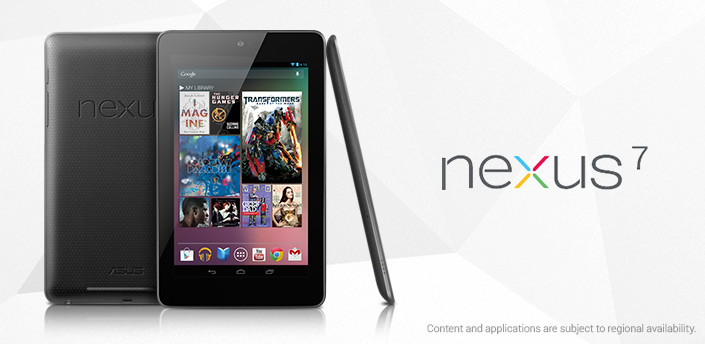
It was expected.. so here comes Google with another Android Tablet in sub-iPad  market. Prices point and size makes it clear that they don't want to go head on with Apple. So we will have to wait for couple of years more to see real good competitor for iPad.

I don't think that these $199 tablets are going to dent iPad market any time soon. These tablets are going to be second or third optional device or may be entry point tablets for kids.. I don't know.. but they are not going to be choice for any serious user with good valet. Let us see.

Unless these tablets have something magical which will be really different than iPad..

In my view, even if they go for these 7 inch tablets, Google and Amazon should not keep them really low end. Gone are the times when you can launch product in iPhone/iPad style of initially launching bare-bone device and keep on adding features slowly into it. That was then, when there was no iPad to refer to. Bar for Amazon and Google is already set really high by Apple. They need to accept it.. In the mean time they can launch these dinky tablets as an experiment and if users buy them good.. otherwise there is always next version..

However, Nexus 7 has front end camera which was not there in Amzon's tablet and they are also throwing $25 on Google Play store.. Screen resolution looks okay.. also, with original Android on it, hope that it will be much more open than Amzon fire. but then, Amazon should be coming up with next beefier version any time soon.. which I am sure should be better in terms of feature than Galaxy 7. Good news is that due to competition, they can't even dream of charging more to their next versions..

Good Luck with this Nexus thingy!!! I don't see myself buying it anytime soon unless.. unless.. I hear from you all something magical about it..


S.F. SOFTWARE CONFERENCE

Google takes full step into selling own product line


Search giant unveils its first tablet and a home entertainment console


By Brandon Bailey


SAN FRANCISCO — Pushing further into the consumer electronics business, Google announced Wednesday that it will sell a new digital home entertainment
 console and a 7-inch tablet computer aimed at bolstering its competition with Apple, Amazon and other rivals.

The giant Internet search company also showed off a host of new products and features for its Android mobile operating system, including new TV, film and magazine offerings in Google’s online store, and a voice-enabled search function that is Google’s answer to Apple’s vaunted digital assistant Siri.

While those seem far removed from Google’s core business of Internet search advertising, analysts say the new products are
 part of a strategy aimed at preserving Google’s dominance in that lucrative business. To do that, it hopes to deliver a broad range of digital media — books, music, films and other services — within an ecosystem of Google products at a time when other companies are luring consumers with similar services. 


KARL MONDON/STAFF 

Google unveils its Nexus 7 at the I/O conference Wednesday.


“It’s less about the hardware and more about the experience,” said Richard Shim, a mobile-computing expert with NPD Display-Search. “They are pushing into new services, but at the end of the day it’s an indirect way of highlighting their core business.” 

Google also invoked its freewheeling roots during the kickoff of the company’s annual three-day software conference. At one point, co-founder Sergey Brin bounded on stage at the Moscone Center to show off a pet project, the computer- in-a-headset known as Google Glass. A video screen behind him showed a team of sky divers inside a blimp flying over San Francisco, and the convention center audience cheered as the sky divers — wearing the cyborg-looking Google Glass headsets — leapt from the blimp and landed on the Moscone building’s roof. 

Images from their headsets were streamed over an Internet connection. The device, which also can receive data and messages, is still under development. 

As expected, Google CEO Larry Page did not appear, after the company said last week that he lost his voice under undisclosed circumstances. Brin said Wednesday that he’s “not worried” about Page, but “we didn’t want to stress him out by having him talk a lot.” 

The most anticipated news of the day, however, was the unveiling of Google’s new $199 Nexus 7 tablet, which will be manufactured by Asus according to Google’s design, and sold by Google through its online Google Play store. Google is using the tablet to showcase the features of its newest Android software, known by the code-name Jelly Bean. Microsoft is following a similar strategy with its own tablet, showing off new Windows software. 

“We wanted to provide the best of the Google experience, the way that Google envisions it,” said Android product director Hugo Barra. The tablet has a high-definition display and enough processing power for fast-paced video games, the company said. But Google Play director Chris Yerga stressed that the tablet is also well-suited to reading magazines and books. That’s a sign that Google is also positioning the Nexus 7 against Amazon’s popular Kindle Fire, which to date is one of the few Android-based tablets that has sold particularly well. 

Android is the world’s most popular operating software for smartphones, but Apple has dominated the tablet market with its iPad, which runs on Apple’s own software. Like Google, Amazon and Apple sell books, videos, music and other digital material over the Internet. 

Google’s new home entertainment console, dubbed Nexus Q, seems aimed at competing with similar streaming devices made by Apple, Sonos, Roku and others. While most consumer electronics devices sold in the United States are made by contractors in Asia, The New York Times reported that the Nexus Q is being assembled at an undisclosed Silicon Valley location. 

The bowling-ball shaped console can be controlled from an Android smartphone or tablet. But analyst Patrick Moorhead of Moor Insights & Strategy said he’s skeptical it will be a hit because its $299 price is higher than competing devices with similar capabilities. 

While Google doesn’t have much practice making and selling its own hardware — other than a Nexus phone that was not a success two years ago — Google has put years of work into developing voice-recognition technology. It already offers voice-enabled translation and navigation services. The new voice-enabled features in Jelly Bean go further by answering spoken questions with a naturalsounding female voice. 

In a demonstration, it appeared to function in a manner similar to Apple’s Siri. Analysts have warned that Siri could be a threat to Google’s core Internet search business if users of Apple devices find it easier to simply talk to their iPhones rather than type in a Google query. “Google has to do something just as good with voice because that may be where search is going for mobile devices,” said Al Hilwa, a software industry analyst with IDC. 

From the demonstration, it wasn’t clear how wide a range of questions can be answered by Google’s voice search service. Executives also showed another new search feature in Jelly Bean, called Google Now, which provides automatic updates on information the user has previously searched for — such as the status of an airline flight or the score of a baseball game. Executives said the service is only available for certain types of queries, although they plan to add more capabilities in the future. 

Follow Brandon Bailey at Twitter.com/brandonbailey. 


Tuesday, May 29, 2012

Facebook Phone with fOS or Fboid?

Seems that we might have new competitor for iPhone and our beloved Samsung and other Android phones.. There could be fOS or FABoid or  something like that coming soon. or Blackberries or blueberries could be become Face-berries or book-berries :-)  or even Nokia could be Fokia.. Just kidding..

 I am in lighter mood today so all this crap.. But there is some reality to this news and it does make sense from one angle...

FB is getting hit hard by their mobile strategy where they are felling little lonely.. lot or most of the users access their FB account thru their smart phones which are currently being controlled by apples, oranges, berries and goggles of the world.. Poor FB is left with free service on them without any revenue gain.. They can hardly show anything to users on these fruit ninja phones..

So here they come back.. armed with 16 Billion dollars in their bank account.. they go for investment cum shopping spree.. Off course, their senior leadership has to take bigger risks and make better futuristic strategies.. You never know.. they may hit jackpot or just blow off all the IPO money and relegate FB to Yahoo status.. problem is, that if they don't act now and act totally differently, they will be Yahoo in next 5-7 years any how (or may be faster)..

Some how I don't buy into all this crap of mobile issue.. I would rather work on making it more easy to use on mobile and even on tablets so users can more easily access and enjoy their tool. Also, they need to come up with something like Google's ad-sense platform where even user benefits if user creates content and they try to sell users targeted adds based on the content users have created.

But for now, If I could, I would be short on FB stock.. I may be wrong (many times I have been wrong, otherwise, I would have been writing blogs full time instead working for someone else)..

Enjoy the news or I should say rumor..  you never know it may change the face of the world again....


http://www.siliconvalley.com/news/ci_20728939/facebook-hoping-release-smartphone-by-next-year


HIGH-TECH CROSSOVER

Facebook may revive smartphone


Social network has hired former iPhone engineers as it explores future in hardware, sources say


By Nick Bilton


New York Times


Can a software company build its own smartphone? We may well find out soon.

In the past week, Google completed its acquisition of the hardware maker Motorola Mobility for $12.5 billion, which could lead to the search giant making its own smartphone. And another software titan might be getting into the hardware game as well: Facebook.

Employees of Facebook and several engineers who have been sought out by recruiters there, as well as people briefed on Facebook’s plans, say the company hopes to release its own smartphone by next year. These people spoke only on condition of anonymity for fear of jeopardizing their employment or relationships with Facebook.

The company has already hired more than half a dozen former Apple software and hardware engineers who worked on the iPhone, and one who worked on the iPad, the employees and those briefed on the plans said.

This would be Facebook’s third effort at building a smartphone, said one person briefed on the plans and one who was recruited. In 2010, the blog TechCrunch reported that Facebook 
was working on a smartphone. The project crumbled after the company realized the difficulties involved, according to people who had worked on it. The website AllThingsD reported last year that Facebook and HTC had entered a partnership to create a smartphone, code-named “Buffy,” which is still in the works. 

Now the company has been going deeper into the process, by expanding the group working on “Buffy,” and exploring other smartphone projects, too, creating a team of seasoned hardware engineers who have built the devices before. 

Meeting with chief 

One engineer who formerly worked at Apple and worked on the iPhone said he met with Mark Zuckerberg, Facebook’s co-founder and chief executive, who then peppered him with questions about the inner workings of smartphones. It did not sound like idle intellectual curiosity, the engineer said; Zuckerberg asked about intricate details, including the types of chips used, he said. Another former Apple hardware engineer was recruited by a Facebook executive and was told about the company’s hardware explorations. When asked Friday, Facebook did not deny or confirm that a project to build a smartphone existed, but pointed to a previous statement it gave to AllThingsD last year that said in part, “We’re working across the entire mobile industry; with operators, hardware manufacturers, OS providers and application developers.” 

For Facebook, the motivation is clear: As a newly public company, it must find new sources of revenue, and it fears being left behind in mobile, one of the most promising areas for growth. “Mark is worried that if he doesn’t create a mobile phone in the near future that Facebook will simply become an app on other mobile platforms,” a Facebook employee said. 

Facebook is going to great lengths to keep the phone project a secret, specifically not posting job listings on the company’s job website, but instead going door-to-door to find the right talent for the project. 

But can a company that is wired as a social network learn how to build hardware? Mixing the cultures of hardware and software designers is akin to mixing oil and water. With the rare exception of Apple, other phone makers aren’t very good at this. 

The biggest names in consumer electronics have struggled with phone hardware. Hewlett-Packard tried and failed. So did Dell. Sony has never done very well making phones. 

“Building isn’t something you can just jump into,” explained Hugo Fiennes, a former Apple hardware manager for the first four iPhones who has since left Apple and is starting a new hardware company, Electric Imp. “You change the smallest thing on a smartphone and you can completely change how all the antennas work. You don’t learn this unless you’ve been doing it for a while.” 

He added, “Going into the phone business is incredibly complex.” 

Facebook also faces hurdles, often of its own making, on mobile. Twitter, for example, is fully integrated into the Apple iPhone and allows people to seamlessly send Twitter messages with photos or article links. Facebook, which has had a contentious relationship with Apple, is still not integrated into iOS. 

One Facebook employee said the phone project had been rebooted several times because Facebook originally thought it could figure out hardware on its own. The company has since learned that it needed to bring in people with previous phonemaking experience, several people said. So it is hiring hardware engineers to work with a phone manufacturer and design the shape, style and inner workings of a Facebook phone. 

Easy market entry? 

Despite the difficulties, Facebook seems well positioned in certain ways to enter the smartphone market. It already has an entire operating system complete with messaging, calendar, contacts and video, and an immense app store is on its way, with thousands of highly popular apps. There’s also that billion-dollar camera app, in the form of Instagram. If Facebook fails with its own team of engineers, it could buy a smartphone maker. The company took in $16 billion from its bumpy IPO. It could easily scoop up an infirm company like Research In Motion, which is valued at less than $6 billion, and drop a beautifully designed Facebook operating system on top of RIM’s phones. HTC is upset with Google for buying Motorola, which is worth about $11.8 billion and becoming cheaper by the day. Facebook would not necessarily challenge Apple if it enters the smartphone marketplace. Instead, it could be Facebook vs. Google, which makes the Android operating system, with both companies going after a huge number of buyers of lowerpriced smartphones. 

For Facebook, the motivation is clear: It must find new sources of revenue, and it fears being left behind in mobi le . 

Friday, May 25, 2012

Is it time to buy MSFT?

Seems that our friends in upstate Washington are working hard to get back to track of lost glory. Off the late I started liking their products and more importantly their strategy and innovation they are working on.. all these news seems to be good for all the consumers both retail and enterprise. As long as they don't fumble Windows8 as they did Vista, they should be golden.

Across the board I am hearing good news.. on cloud side I heard that their new hypervisor (Hyper-V) product is really good and finally it is ready to compete with VMware.. Their Cloud drive seems to be great. Windows8 looks promising.. Windows Mobile phone with Nokia is doing well.. So if everything falls back properly, they should be back to good growth after long time..


MICROSOFT

Office said to be coming to Android, iPad devices


By Michelle Maltais


Los Angeles Times


It looks as if fall could be a very busy season for Microsoft. The software maker appears poised to release Office for iPad and Android tablets and an Outlook Web app for iOS this fall, according to reports.

Although officially Microsoft has no comment, reports have surfaced that the full suite of Office apps will have a November release, according to website BGR. And the app is said to look almost identical to the leaked images from a few months ago, according to BGR’s source. The source also claimed the app’s loading screen read “Office for iOS,” suggesting iPhone and iPod Touch could have the software in
 their future as well. The App Store may see yet another Microsoft offering ahead of it. An Outlook app known as “OWA Mobile Client for iOS” is reportedly in the works for devices running iOS 5 or later, according to AppleInsider.

Microsoft is currently planning for both Outlook Web App and the new Lync to debut on the iOS App Store before the end of October, a person familiar with the upcoming software revealed. Both will be native iOS applications that render Web content with the same tiled Metro user interface style that can be found on
 Windows Phone.

Saturday, April 28, 2012

Can Samsung takeover Apple in Smartphone Segment as well?

Samsung is already number one in overall cellphone market share. First time they overtook Nokia in World's largest Cell phone manufacturer. Nokia is trying a comeback and it would be interesting to see in next couple of quarters, how this will shape overall cellphone market. Along with Nokia & Samsung, it is Microsoft as well, whose future is at stake. Cell phones are already accounting for close to 50% of revenues of companies like Samsung and Apple.

As of now, Samsung is clear winner in overall Cellphone market. However, they face uphill battle with Apple's flagship iPhone. It will be difficult to compete with iPhone in terms of overall value and satisfaction. Unless, Apple goof's up big time in coming years, which they can as Steve Job's is not around and I am already feeling that new management is more focussed directly on share prices instead of customer satisfaction, usability and attention to details. We have to accept that nothing is permanent and current iPhone's dominance will go down sooner or later.

At the same time, Samsung is coming up with really great phones with really cool and great features and trying to compete hard with iPhone. However, in my view they need to focus more on some really great selected features and make them really easy and standardize across the board. They also need highlight and focus where Apple restrict's iPhone... and moreover, build some really cool and easy to use ecosystem. Bring some standardization across the devices so accessories can be useful. One feature which I really envy from Android phones is simplicity to play HD videos (1080p) directly to HDTV using HDMI cable.. But still, it has clumsy UI, especially as compared to iPhone. They need to work on reduction in number of clicks needed to accomplish things..

I haven't played too much on Samsung phones except to my stone age Blackjack long time back. Which was really clumsy phone based on Windows CE (or whatever it was called) and voice quality was so bad that I took a vow to never use Samsung phone. Only feature which I used to like was tethering of it which used to give me great internet connectivity to my laptop. However, with iPhone, 99% of time you don't need tethering, you can literally do everything on it, despite its lower screen size. I hope my nephew who works in Samsung is reading this and will soon send me some great samsung phone to try so I can write better review ;-)

Hope to see real good competition in coming days.. which should result in really cool phones for all of us. I hope, Motorola/Google will also churn out great phones in coming days.. so will Nokia with their MS collaboration... future seems to be great!!!


Samsung cellphones beat out Nokia’s


By Andrea Chang


Los Angeles Times


Samsung in the first quarterbecametheworld’s largest cellphone brand for the first time, overtaking longtime market leader
 Nokia. In the smartphone segment, Samsung remained in second place behind Apple, according to market research firm IHS iSuppli.

The South Korean electronics giant shipped 92 million cellphones worldwide in the first quarter, compared with 83 million for Nokia. While Samsung’s shipments declined by 13 percent from the fourth quarter of 2011, Nokia’s dropped by 27 percent.

In the smartphone segment, Apple shipped 35 million units in the first quarter compared with 32 million for Samsung. Apple’s smartphone shipments declined 5 percent from the fourth quarter, compared with 11 percent
 for Samsung. First-quarter declines in the shipments of smartphones and cellphones reflect normal seasonal patterns, in which sales decrease after the peak holiday period in the fourthquarter. “With cellphones now accounting for more than 40 percent of Samsung’s overall revenue, it’s clear that the company’s continued investments in smartphone hardware and software R&D are paying off,” said Wayne Lam, senior analyst of wireless communications at IHS. Lam noted that Samsung’s performance was even more impressive because its latest Galaxy S III handset has yet to be launched, with shipments set to start in May. “This indicates Samsung is likely to make further progress in market share in 2012,” he said.

Monday, December 19, 2011

Will you buy Apple Clone Products?

A very interesting article on Apple clone product flooding market. Off-course, none of them run mac OSX or iOS but physically they are quite similar to their Apple counterparts.. Some of them are already there.. especially, copy of Mac Book Air aka MBA.. I haven't seen any real iPhone clone yet but in general Android is kind of inspired by iPhone.. at least Steve Jobs strongly thought that way..

How good they are? Look and feel wise, you might be fairly happy.. it is easy to copy that.. but core thing about Apple is their OS and its integration with its hardware. nobody could beat that.. When I didn't had Mac Book, I used to think that what a waste it is.. you can but two windows machines, each of them equally or more more powerful than comparable Mac..

Once you start using them, you realize that there is much more than just Processor, memory and HDD.. Coolest things which I liked were Graphics... oh.. it is awesome.. DVD may be compared to blu-ray rendering on TV.. almost.. then keyboard..  finally.. even after usage of almost three years.. speed of machine is still as if it is brand new.. battery life or energy management.. amazing.. speed of coming up.. I can bet.. it will be even faster than double powered windows machine.. off course.. you rarely have to shut down.. you just shut screen down and standby power consumption is so low that you rarely have to shut down..

there are thousands of features like this.. okay.. at least hundreds.. there is no comparison with that.. once you are with mac.. you can't imagine going back to windows.. you do have to give couple of months of learning curve if you were heavy windows user.. you will miss few keys.. but very soon you will start appreciating ease and simplicity of mac.. I can literally fill tens of pages like in support of mac.. but I think, need to stop.. enjoy great article by Larry Magid..


Next year could see rush of clone Apple products
While there are no other machines on the market that legally run iOS apps, there are plenty of phones and tablets that were inspired by Apple.


Could 2012 be the year of the Apple clones? It seems likely based on what I expect to be announced at next month’s Consumer Electronics Show in Las Vegas.

I’m not talking about exact duplicates. Apple doesn’t license its operating systems, so unlike what happened to IBM in 1982, we’re not going to see products that run off-the-shelf Mac or iPad software. It was at that year’s now-defunct Comdex computer show where Compaq introduced its fully IBM-compatible PC that launched the multibillion-dollar industry that eventually lead to Dell, Hewlett-Packard, Sony and hundreds of other companies producing computers that were 100 percent compatible with the platform IBM built when it introduced its first PC only a year earlier.

Eventually, IBM pulled out of the PC business.

Those companies were able to clone the IBM PC because IBM made the mistake of allowing its partner, Microsoft, to license a virtually identical version of its PC-DOS operating system to any takers. Microsoft developed DOS for IBM, which shipped it with the new PC in August 1981.

Shortly after the IBM PC shipped, Microsoft started negotiating deals for the nearly identical and slightly renamed MS-DOS, which enabled other companies’ machines to run the same software and use the same peripherals as IBM’s PCs.

Apple did license its Mac operating system for a short time after Steve Jobs was fired, but Jobs ended those deals shortly after returning to Apple.

There was never even a hint of a licensing deal for the iPod, iPhone or iPad so — at this juncture — there is no such thing as a Mac or iOS clone.

Or is there?

Well, it depends on how you define clone. While there are no other machines on the market that legally run iOS apps or native Mac programs, there are plenty of phones and tablets that were clearly inspired by Apple.
I’m not suggesting that Apple should win its many pending lawsuits against the makers of Android phones and tablets, but at least some judges have found credibility in Apple’s claims that the devices violate its patents. I don’t know much about patent laws and I love that Apple has competition from Android makers.

But it’s hard not to notice that the look and feel of many Android devices are similar to those running iOS.

I own several iOS and Android devices and use them almost as interchangeably as when I switch between a Chevy and a Toyota. There are clear differences between the two operating systems but as far as general look is concerned, there are lot of similarities. So we’ll see plenty of Android phones and tablets next year, including some that are much cheaper than Apple’s products. We’ll also see devices with a physical look and feel inspired by Apple’s popular MacBook Air notebook PC.

As I’ve written, I bought a 2.4 pound, 11-inch MacBook Air to replace the slightly heavier and larger Lenovo ThinkPad X300 I used to carry around.

The Air is not only lighter and thinner, but is elegantly designed. There are some people who buy Macs because they prefer OS X to Windows, but I have no preference when it comes to operating systems. Despite Windows’ mixed reputation, I find Windows 7 to be fast, reliable and as easy to use as OS X. What I love about the MacBook Air is the design of the hardware.
No reputable company is going to try to clone the Mac’s OS X operating system, but we’re likely to see plenty of Windows machines that look a lot like the Air. Asus has already taken the wraps off a couple of models that have a similar size and weight, as well as that cool tapered look where the front of the machine is thinner than the back.

Other machines in this emerging “Ultrabook” category include the Lenovo IdeaPad U300s and the Toshiba Portege Z830. Comparable to the 13-inch MacBook Air, both weigh less than 3 pounds. These machines tend to start at just shy of $1,000 but unlike Macs, you’re more likely to see them at a discount. At next year’s CES, I expect to see plenty of new Ultrabooks, including some at lower prices. If Ultrabooks catch on, I wouldn’t be surprised to see some for under $500 by CES 2013.

The other thing we’ll see demonstrated at CES next year are notebooks and tablets running Microsoft’s as-yet-unreleased Windows 8, which is Microsoft’s answer to iOS and OS X wrapped up into a single operating system. They won’t be for sale until next fall, but some vendors plan to show them at their booths. Unlike Apple’s current strategy, Microsoft will have a single operating system for both tablets and PCs that’s optimized for touch screens and tablet-specific apps but also able to run traditional Windows programs. Users will launch apps by touching on-screen “tiles,” as is now the case with Microsoft’s Windows Phone operating system.

When I walk around CES in January, my shoulder bag will be about six ounces lighter than last year thanks to my MacBook. Maybe the following January, I’ll be carrying an even lighter Windows machine.
Contact Larry Magid at . Listen for his technology chats on KCBS-AM (740) weekdays at 3:50 p.m.

Wednesday, February 16, 2011

Apple's new Subscription delivery system

Or I should say new money minting machine... We all love Apple's products and they do deliver great value in terms of usability, ease of use and reliability. I don't know.. In past 5-10 years I have been proved wrong about Apple's approach.. So I will be cautious this time. However, I do believe that Apple is becoming to greedy with their Subscription / Content Delivery aka iTunes approach. Even though I don't have Amazon Kindle and I am basically good Apple customer with lot Apple products in house.. I don't like Amazon Kindle getting hurt by Apple's new Subscription Delivery System approach. This may force me towards Android which is more free and becoming equally good in terms of value for money.
I think Apple needs to remember that whatever goodwill they have generated with iPhone/iPad etc.. can vanish in few days/weeks and customers can switch to other devices if they realize that Apple is taking them for a ride. I hope Apple will work on it and fix it and won't return to 90s depressing era where despite MAC being cool, it got hit by Microsoft badly.. In today's scenario, Google/Android is thousand times better company as compared to Microsoft. So, one single mistake by them can lead them back to same era. I hope they have learned their lessons well and won't repeat same mistakes.

I am fine with their 60% gross margin on hardware as I see direct value in it. However, I may not like paying 30% of all my online purchases to them on top of my hardware cost to Apple. They need to fix it and keep iTunes open and free to their own content competitors as well if needed.