This headline caught my immediate attention.. and details are also funny.. at the same time, they affirm my faith in Apple's marketing hoopla about online waiting lists and other sold outs. I strongly believe that even Microsoft is applying same theory for their newly launched surface tablet. I think it has become mandatory requirement for any product launch to declare that you are sold out within few hours of your online launch... or start giving your waiting list as 3-4 weeks.
Coming back to iPad mini.. I think I have wrote a lot about it in my previous posts. In my view it is great product except for two things:
Price.. is relative.. depending on your valet size. But in general, media has hyped it so much that value for money factor has come in and it dead sure that by thanks-giving Apple will heavily discount mini. and I am assuming that those discounts will become permanent till next release or may be forever. I am hoping that it will be definitely $299 or below.
Non-Retina display will go away by Jan/Feb/March upgrade refresh cycle. Current Mini release was scheduled in Oct/Nov mainly for investors. Otherwise there wasn't enough growth for wall street. It was more or less catch 22 situation for Apple. Most likely, they simply didn't had enough retina display capacity for mini. Or it could be engineering requirement.. with resolution same as iPad2, there was relatively very less engineering needed on software/iOS side.
This holiday season, I think, even iPad4 price will be under pressure as Google launches Nexus 10 with $399 price. Let us see, how it goes.. I hope two things coming out of mini's launch..
Google Nexus and Amazon needs to work harder and invest more resources in tablets and more importantly in OS (Android) and refine them to give better user experience and integration with different display form factors. I was literally disappointed with Amazon's Kindle Fire HD.
Enjoy this article...
DOWNSIZED IPAD CROWD
The lines are Mini, too
Excitement is a bit more subdued than usual as Apple’s small-tablet entry carries big price
By Heather Somerville
hsomerville@mercurynews.com
PALO ALTO — The turnout for Apple’s release of the iPad Mini on Friday morning was — just like the new 7.9-inch tablet — noticeably downsized.
The early-morning lines outside stores in Silicon Valley and across the world were uncharacteristically short for an Apple launch, leading some to speculate that Apple fanboys and fangirls are growing weary of frequent and hyped product upgrades. Since the first iPad hit stores more than two years ago, competitors have emerged with 7inch tablets priced $100 cheaper.
Analysts project modest sales for the Mini this weekend, and for the fourth-generation iPad also released Friday. By 7:30 a.m. Pacific time, a half-hour before the Palo Alto store opened its doors, about 35 customers had lined up — a fraction of the number who scooped up the third-generation iPad on its launch day.
Brad Peterson, of Los Altos, was first in line at 2 a.m. When he saw the empty sidewalk outside the Apple Store on University Avenue, he thought he had the wrong day.
“I go to these things all the time, and (2 a.m.) usually gets me somewhere in the middle of the line,” he said.

GARY REYES/STAFF PHOTOS
Christian Lindholm, of Helsinki, Finland, exits the Apple Store in Palo Alto carrying the pair of iPad Minis he just bought.

Brad Peterson, of Los Altos, holds a stack of iPad Minis and regular iPads he just purchased.
Peterson said he was surprised to be first in line when he arrived for the iPad Mini launch at 2 a.m.
Friday.
So he pulled out his third-generation iPad — one of about eight tablets he owns — to confirm the date, and with a quick Google search discovered that turnout was low at stores across the world. Reuters reported that crowds waiting for the newest iPad were smaller than for previous launches from Sydney to Amsterdam, with staff at the Hong Kong Apple Store appearing to outnumber customers waiting in line.
Jeff Wang turned around and went home after he found the Palo Alto store deserted at 10 p.m. Thursday night. Wang, of Saratoga, came back at 2:30 a.m. to secure the second spot in line, bewildered that there weren’t already hundreds waiting by that hour.
“The last couple of times I came around 11 p.m. the night before and the lines were long,” Wang said.
Mike Smithwick, a San Jose app developer who waited toward the end of the line, suspected that some Apple fans had their fill with the first three releases.
“I think everyone is lined out,” he said.
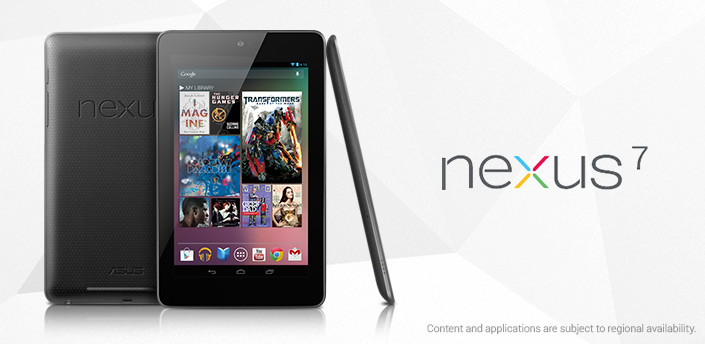
The iPad Mini is Apple’s answer to popular 7-inch tablets like Amazon’s Kindle Fire and Google’s Nexus 7. But Apple priced its smaller tablet entry much higher than those competitors — the device starts at $329, while other 7-inch tablets can cost as little as $199.
For some customers, the bigger turnoff is that the Mini is available only on Wi-Fi; the company will release a version that connects to cellular networks in a couple of weeks, when some expect to see an uptick in sales.
Analysts doubt Apple will perform as well with this launch as it has previously, with Piper Jaffray analyst Gene Munster — an Apple bull who typically offers the highest projections for Apple sales — forecasting opening-weekend sales of about 1 million to 1.5 million for the Mini.
BTIG research analyst Walter Piecyk said the sales total Munster predicted would be a disappointment.
“We believe Apple’s first weekend sales of the iPad Mini needs, at a minimum, to top the 3 million first weekend sales of the iPad 3 in order to demonstrate that the management team can execute on ramping supply of new products and to provide some evidence that there is adequate demand for a smaller iPad at these price points,” he wrote in a note Friday morning. However, lower opening-weekend sales could help Apple avoid disappointing consumers. When the iPhone 5 debuted in September, Apple sold a record 5 million of the devices in the first weekend, but still couldn’t meet demand because of production delays.
IDC analyst Ryan Reith cautioned Friday not to dismiss the Mini’s popularity because of short store lines. Many customers will probably order online, he said, and others will wait until closer to the holidays.
Short lines didn’t mean Apple fans were short on excitement. The modest crowd in Palo Alto joined Apple staff with loud cheers when the store opened its doors two hours early for the event. Many walked out minutes later with a grin and two Minis — the limit for each customer. Peterson said the Minis were an early Christmas gift for his two teenage daughters — although he had a few hours to play with the tablets while the girls were in school.
“December 25 is pretty arbitrary,” he said. “Apple decides when Christmas comes in our house.”
More than a few New Yorkers can expect a Mini under the tree this year. About 600 fans braved the power outages, gas shortages and hobbled transit systems left by Superstorm Sandy to line up early outside the Fifth Avenue store, according to a Bloomberg News report. The New York flagship sold out of the Mini just hours after opening, and blogs and tweets indicated that a smattering of stores across the globe had sold out by the afternoon. However, it’s unclear how much stock the stores had to begin with.
Friday was the first Apple launch event for Christian Lindholm, of Finland — the startup developer couldn’t resist picking up a couple Minis while in California on business.
“I have to do it in Silicon Valley,” he said. “This is the store to do it. It’s the grandfather store; sort of in Steve’s hood.”
Like others at the store, he owns a third-generation iPad — released just seven months ago — and won’t be buying the fourth anytime soon. Several customers said they were unimpressed with the upgrades and unwilling to pay another $499 to $699 just months after the previous version was released.
Said Lindholm: “It doesn’t feel like a fourth generation. It feels like a 3.2. Staff writer Jeremy C. Owens contributed to this report. Contact Heather Somerville at 925-977-8418. Follow her at Twitter.com/ heathersomervil.

GARY REYES/STAFF
Apple employees greet customers Friday inside the company’s Palo Alto store. Far fewer people were in line this time than the hordes who queued up for the release of the third-generation iPad.
Coming back to iPad mini.. I think I have wrote a lot about it in my previous posts. In my view it is great product except for two things:
- High Price or I should say low value for money
- Non-Retina Display
Price.. is relative.. depending on your valet size. But in general, media has hyped it so much that value for money factor has come in and it dead sure that by thanks-giving Apple will heavily discount mini. and I am assuming that those discounts will become permanent till next release or may be forever. I am hoping that it will be definitely $299 or below.
Non-Retina display will go away by Jan/Feb/March upgrade refresh cycle. Current Mini release was scheduled in Oct/Nov mainly for investors. Otherwise there wasn't enough growth for wall street. It was more or less catch 22 situation for Apple. Most likely, they simply didn't had enough retina display capacity for mini. Or it could be engineering requirement.. with resolution same as iPad2, there was relatively very less engineering needed on software/iOS side.
This holiday season, I think, even iPad4 price will be under pressure as Google launches Nexus 10 with $399 price. Let us see, how it goes.. I hope two things coming out of mini's launch..
- It has broken myth of Apple's product launch success. It is loud and clear message to Apple that customers are not going to buy garbage (sorry about this extreme term) for price of gold.
- Increased competition to an extent that we will really see some great products in coming months not only from Apple but many other competitors.
Google Nexus and Amazon needs to work harder and invest more resources in tablets and more importantly in OS (Android) and refine them to give better user experience and integration with different display form factors. I was literally disappointed with Amazon's Kindle Fire HD.
Enjoy this article...
DOWNSIZED IPAD CROWD
The lines are Mini, too
Excitement is a bit more subdued than usual as Apple’s small-tablet entry carries big price
By Heather Somerville
hsomerville@mercurynews.com
PALO ALTO — The turnout for Apple’s release of the iPad Mini on Friday morning was — just like the new 7.9-inch tablet — noticeably downsized.
The early-morning lines outside stores in Silicon Valley and across the world were uncharacteristically short for an Apple launch, leading some to speculate that Apple fanboys and fangirls are growing weary of frequent and hyped product upgrades. Since the first iPad hit stores more than two years ago, competitors have emerged with 7inch tablets priced $100 cheaper.
Analysts project modest sales for the Mini this weekend, and for the fourth-generation iPad also released Friday. By 7:30 a.m. Pacific time, a half-hour before the Palo Alto store opened its doors, about 35 customers had lined up — a fraction of the number who scooped up the third-generation iPad on its launch day.
Brad Peterson, of Los Altos, was first in line at 2 a.m. When he saw the empty sidewalk outside the Apple Store on University Avenue, he thought he had the wrong day.
“I go to these things all the time, and (2 a.m.) usually gets me somewhere in the middle of the line,” he said.
GARY REYES/STAFF PHOTOS
Christian Lindholm, of Helsinki, Finland, exits the Apple Store in Palo Alto carrying the pair of iPad Minis he just bought.
Brad Peterson, of Los Altos, holds a stack of iPad Minis and regular iPads he just purchased.
Peterson said he was surprised to be first in line when he arrived for the iPad Mini launch at 2 a.m.
Friday.
So he pulled out his third-generation iPad — one of about eight tablets he owns — to confirm the date, and with a quick Google search discovered that turnout was low at stores across the world. Reuters reported that crowds waiting for the newest iPad were smaller than for previous launches from Sydney to Amsterdam, with staff at the Hong Kong Apple Store appearing to outnumber customers waiting in line.
Jeff Wang turned around and went home after he found the Palo Alto store deserted at 10 p.m. Thursday night. Wang, of Saratoga, came back at 2:30 a.m. to secure the second spot in line, bewildered that there weren’t already hundreds waiting by that hour.
“The last couple of times I came around 11 p.m. the night before and the lines were long,” Wang said.
Mike Smithwick, a San Jose app developer who waited toward the end of the line, suspected that some Apple fans had their fill with the first three releases.
“I think everyone is lined out,” he said.
The iPad Mini is Apple’s answer to popular 7-inch tablets like Amazon’s Kindle Fire and Google’s Nexus 7. But Apple priced its smaller tablet entry much higher than those competitors — the device starts at $329, while other 7-inch tablets can cost as little as $199.
For some customers, the bigger turnoff is that the Mini is available only on Wi-Fi; the company will release a version that connects to cellular networks in a couple of weeks, when some expect to see an uptick in sales.
Analysts doubt Apple will perform as well with this launch as it has previously, with Piper Jaffray analyst Gene Munster — an Apple bull who typically offers the highest projections for Apple sales — forecasting opening-weekend sales of about 1 million to 1.5 million for the Mini.
BTIG research analyst Walter Piecyk said the sales total Munster predicted would be a disappointment.
“We believe Apple’s first weekend sales of the iPad Mini needs, at a minimum, to top the 3 million first weekend sales of the iPad 3 in order to demonstrate that the management team can execute on ramping supply of new products and to provide some evidence that there is adequate demand for a smaller iPad at these price points,” he wrote in a note Friday morning. However, lower opening-weekend sales could help Apple avoid disappointing consumers. When the iPhone 5 debuted in September, Apple sold a record 5 million of the devices in the first weekend, but still couldn’t meet demand because of production delays.
IDC analyst Ryan Reith cautioned Friday not to dismiss the Mini’s popularity because of short store lines. Many customers will probably order online, he said, and others will wait until closer to the holidays.
Short lines didn’t mean Apple fans were short on excitement. The modest crowd in Palo Alto joined Apple staff with loud cheers when the store opened its doors two hours early for the event. Many walked out minutes later with a grin and two Minis — the limit for each customer. Peterson said the Minis were an early Christmas gift for his two teenage daughters — although he had a few hours to play with the tablets while the girls were in school.
“December 25 is pretty arbitrary,” he said. “Apple decides when Christmas comes in our house.”
More than a few New Yorkers can expect a Mini under the tree this year. About 600 fans braved the power outages, gas shortages and hobbled transit systems left by Superstorm Sandy to line up early outside the Fifth Avenue store, according to a Bloomberg News report. The New York flagship sold out of the Mini just hours after opening, and blogs and tweets indicated that a smattering of stores across the globe had sold out by the afternoon. However, it’s unclear how much stock the stores had to begin with.
Friday was the first Apple launch event for Christian Lindholm, of Finland — the startup developer couldn’t resist picking up a couple Minis while in California on business.
“I have to do it in Silicon Valley,” he said. “This is the store to do it. It’s the grandfather store; sort of in Steve’s hood.”
Like others at the store, he owns a third-generation iPad — released just seven months ago — and won’t be buying the fourth anytime soon. Several customers said they were unimpressed with the upgrades and unwilling to pay another $499 to $699 just months after the previous version was released.
Said Lindholm: “It doesn’t feel like a fourth generation. It feels like a 3.2. Staff writer Jeremy C. Owens contributed to this report. Contact Heather Somerville at 925-977-8418. Follow her at Twitter.com/ heathersomervil.
GARY REYES/STAFF
Apple employees greet customers Friday inside the company’s Palo Alto store. Far fewer people were in line this time than the hordes who queued up for the release of the third-generation iPad.