Showing posts with label ipad. Show all posts

Tuesday, October 1, 2013

that is one huge leap of faith for Delta!!

I will be concerned about flying in Delta.. I would expect them to have at least one emergency bag with all the essential manuals and map etc. Don't they know that Surface runs Microsoft OS? Which can crash anytime anywhere for any reason?? What if Pilot is looking for some critical information and Surface shows them blue screen r asks them to wait while they upgrade?

Having said that, I do agree that Microsoft Surface Pro is damn good replacement of PC. However, entire PC category is getting substituted by tablet category created by iPad.. But agreed that it is good win for Microsoft and clear message for them to spend more on tablet hardware and more importantly OS/ecosystem development.

Due to a very good friend, I happen to be using Surface tablet and I like it for basic PC type of activity. Microsoft's biggest asset is Office suite which makes Surface a very attractive combination from price/performance ratio. However, this logical attractiveness is still not strong enough to overcome love for iPad!!

All the best to Microsoft and Delta for their new adventure!!!


Surface 2 tablets fine fit for Delta


Airline set to buy 11,000 of the Microsoft devices


By Joshua Freed


Associated Press


MINNEAPOLIS — Delta Air Lines plans to buy 11,000 Microsoft Surface 2 tablets for its pilots to replace the heavy bundles of books and maps they haul around now.

Other airlines, including American and United, have been buying Apple’s iPad for that purpose.

Delta says the Surface tablets will save it $13 million per year in fuel and other costs. Right now, each pilot carries a 38-pound flight bag with manuals and maps.

Delta plans to test the tablets on its Boeing 757s and 767s, which are flown by the same group of pilots. The airline is hoping for Federal Aviation Administration approval next year to use the tablets throughout a flight, and it hopes to be using the devices on all of its other planes by the end of next year.

One reason Delta picked a Microsoft device was that it’s easier to give pilots separate sections for company and personal use, said Steve Dickson, Delta’s senior vice president for flight operations.

Pilots will be able to install personal
 software and keep their own items such as photos on the personal section of the devices, while another portion will be dedicated to Delta’s software, Dickson said.

“We trust them to manage that side of the device,” Dickson said.

Another reason for picking the Surface tablet is that Delta’s training software also runs on the same Windows operating system as the tablets, reducing the need to redo that software for another device, Dickson said.

Delta has already done a test program
 where pilots could bring their own devices, including iPads.

In August, Delta said its flight attendants will get Windows phones to process in-flight sales of food, better seats, and other items.

Microsoft announced last week that it is updating its tablet line, which includes the Surface 2s that Delta is buying. The Surface 2 is the cheaper of the two versions sold by Microsoft, retailing for $449 each. Dickson declined
 to say how much Delta is paying.


MARK LENNIHAN/AP

Delta plans to buy 11,000 Microsoft Surface 2 tablets for its pilots to replace heavy bundles of books.

Saturday, November 3, 2012

Mini lines for Mini!!!

This headline caught my immediate attention.. and details are also funny.. at the same time, they affirm my faith in Apple's marketing hoopla about online waiting lists and other sold outs. I strongly believe that even Microsoft is applying same theory for their newly launched surface tablet. I think it has become mandatory requirement for any product launch to declare that you are sold out within few hours of your online launch... or start giving your waiting list as 3-4 weeks.

Coming back to iPad mini.. I think I have wrote a lot about it in my previous posts. In my view it is great product except for two things:


  • High Price or I should say low value for money
  • Non-Retina Display


Price.. is relative.. depending on your valet size. But in general, media has hyped it so much that value for money factor has come in and it dead sure that by thanks-giving Apple will heavily discount mini. and I am assuming that those discounts will become permanent till next release or may be forever. I am hoping that it will be definitely $299 or below.

Non-Retina display will go away by Jan/Feb/March upgrade refresh cycle. Current Mini release was scheduled in Oct/Nov mainly for investors. Otherwise there wasn't enough growth for wall street. It was more or less catch 22 situation for Apple. Most likely, they simply didn't had enough retina display capacity for mini. Or it could be engineering requirement.. with resolution same as iPad2, there was relatively very less engineering needed on software/iOS side.

This holiday season, I think, even iPad4 price will be under pressure as Google launches Nexus 10 with $399 price. Let us see, how it goes.. I hope two things coming out of mini's launch..


  1. It has broken myth of Apple's product launch success. It is loud and clear message to Apple that customers are not going to buy garbage (sorry about this extreme term) for price of gold. 
  2. Increased competition to an extent that we will really see some great products in coming months not only from Apple but many other competitors. 

Google Nexus and Amazon needs to work harder and invest more resources in tablets and more importantly in OS (Android) and refine them to give better user experience and integration with different display form factors. I was literally disappointed with Amazon's Kindle Fire HD.

Enjoy this article...

DOWNSIZED IPAD CROWD 

The lines are Mini, too


Excitement is a bit more subdued than usual as Apple’s small-tablet entry carries big price


By Heather Somerville


PALO ALTO — The turnout for Apple’s release of the iPad Mini on Friday morning was — just like the new 7.9-inch tablet — noticeably downsized.

The early-morning lines outside stores in Silicon Valley and across the world were uncharacteristically short for an Apple launch, leading some to speculate that Apple fanboys and fangirls are growing weary of frequent and hyped product upgrades. Since the first iPad hit stores more than two years ago, competitors have emerged with 7inch tablets priced $100 cheaper.

Analysts project modest sales
 for the Mini this weekend, and for the fourth-generation iPad also released Friday. By 7:30 a.m. Pacific time, a half-hour before the Palo Alto store opened its doors, about 35 customers had lined up — a fraction of the number who scooped up the third-generation iPad on its launch day.

Brad Peterson, of Los Altos, was first in line at 2 a.m. When he saw the empty sidewalk outside the Apple Store on University Avenue, he thought he had the wrong day.

“I go to these things all the time, and (2 a.m.) usually gets me somewhere in the middle of the line,” he 
said. 


GARY REYES/STAFF PHOTOS

Christian Lindholm, of Helsinki, Finland, exits the Apple Store in Palo Alto carrying the pair of iPad Minis he just bought.


Brad Peterson, of Los Altos, holds a stack of iPad Minis and regular iPads he just purchased.

Peterson said he was surprised to be first in line when he arrived for the iPad Mini launch at 2 a.m.

Friday.


So he pulled out his third-generation iPad — one of about eight tablets he owns — to confirm the date, and with a quick Google search discovered that turnout was low at stores across the world. Reuters reported that crowds waiting for the newest iPad were smaller than for previous launches from Sydney to Amsterdam, with staff at the Hong Kong Apple Store appearing to outnumber customers waiting in line. 

Jeff Wang turned around and went home after he found the Palo Alto store deserted at 10 p.m. Thursday night. Wang, of Saratoga, came back at 2:30 a.m. to secure the second spot in line, bewildered that there weren’t already hundreds waiting by that hour. 

“The last couple of times I came around 11 p.m. the night before and the lines were long,” Wang said. 

Mike Smithwick, a San Jose app developer who waited toward the end of the line, suspected that some Apple fans had their fill with the first three releases. 

“I think everyone is lined out,” he said. 

The iPad Mini is Apple’s answer to popular 7-inch tablets like Amazon’s Kindle Fire and Google’s Nexus 7. But Apple priced its smaller tablet entry much higher than those competitors — the device starts at $329, while other 7-inch tablets can cost as little as $199. 

For some customers, the bigger turnoff is that the Mini is available only on Wi-Fi; the company will release a version that connects to cellular networks in a couple of weeks, when some expect to see an uptick in sales. 

Analysts doubt Apple will perform as well with this launch as it has previously, with Piper Jaffray analyst Gene Munster — an Apple bull who typically offers the highest projections for Apple sales — forecasting opening-weekend sales of about 1 million to 1.5 million for the Mini. 

BTIG research analyst Walter Piecyk said the sales total Munster predicted would be a disappointment. 

“We believe Apple’s first weekend sales of the iPad Mini needs, at a minimum, to top the 3 million first weekend sales of the iPad 3 in order to demonstrate that the management team can execute on ramping supply of new products and to provide some evidence that there is adequate demand for a smaller iPad at these price points,” he wrote in a note Friday morning. However, lower opening-weekend sales could help Apple avoid disappointing consumers. When the iPhone 5 debuted in September, Apple sold a record 5 million of the devices in the first weekend, but still couldn’t meet demand because of production delays. 

IDC analyst Ryan Reith cautioned Friday not to dismiss the Mini’s popularity because of short store lines. Many customers will probably order online, he said, and others will wait until closer to the holidays. 

Short lines didn’t mean Apple fans were short on excitement. The modest crowd in Palo Alto joined Apple staff with loud cheers when the store opened its doors two hours early for the event. Many walked out minutes later with a grin and two Minis — the limit for each customer. Peterson said the Minis were an early Christmas gift for his two teenage daughters — although he had a few hours to play with the tablets while the girls were in school. 

“December 25 is pretty arbitrary,” he said. “Apple decides when Christmas comes in our house.” 

More than a few New Yorkers can expect a Mini under the tree this year. About 600 fans braved the power outages, gas shortages and hobbled transit systems left by Superstorm Sandy to line up early outside the Fifth Avenue store, according to a Bloomberg News report. The New York flagship sold out of the Mini just hours after opening, and blogs and tweets indicated that a smattering of stores across the globe had sold out by the afternoon. However, it’s unclear how much stock the stores had to begin with. 

Friday was the first Apple launch event for Christian Lindholm, of Finland — the startup developer couldn’t resist picking up a couple Minis while in California on business. 

“I have to do it in Silicon Valley,” he said. “This is the store to do it. It’s the grandfather store; sort of in Steve’s hood.” 

Like others at the store, he owns a third-generation iPad — released just seven months ago — and won’t be buying the fourth anytime soon. Several customers said they were unimpressed with the upgrades and unwilling to pay another $499 to $699 just months after the previous version was released. 

Said Lindholm: “It doesn’t feel like a fourth generation. It feels like a 3.2. Staff writer Jeremy C. Owens contributed to this report. Contact Heather Somerville at 925-977-8418. Follow her at Twitter.com/ heathersomervil. 


GARY REYES/STAFF 

Apple employees greet customers Friday inside the company’s Palo Alto store. Far fewer people were in line this time than the hordes who queued up for the release of the third-generation iPad. 

Thursday, November 1, 2012

iPad Mini.. mixed reviews..

There are so many reviews of iPad mini. Mostly it seems great product, other than some dissatisfaction about display. I was happy with even original iPad and iPad so no personal complains. However, once you make your customers addicted to something better, it is difficult to reposition something older. There is/was bound to be that reaction.. Off-course.. Apple's product managers have to have jobs.. without roadmap of retina display in next release they will be out of job..

It will be interesting to see if they can continue to keep this price point. Especially, now Google Nexus 10 is almost in same price range.. Knowing Google, it has to be great product and it has potential to take away market share from both iPad and mini as well. $399 is really great price point for 10 inch tablet and within next one or two iterations it can easily be iPad killer.. We need it do well.. without that Apple is not going to reduce mini's price.. Though I have very strong feeling that Apple will do another refresh of iPad lineup sometime early next year. There is so much action in tablet area that they will have to abandon their yearly refresh cycle and move half yearly cycle..

As we can see with iPhone5 that Apple's quantum leap era is over. They have very few new and really innovative and disruptive ideas left. Apple is left with minor enhancements in processing power, speed and size/form-factor. Honestly, only difference between, iPhone 4S and 5 is screen size. Which, to be honest, I liked from 4S better. That doesn't mean that I am going back to 4S. I think it is just nostalgia.. I will get over soon. There were big differences between iPhone 4 and 4S.. but in my view nothing major between 4S and 5.

I think, iPad mini is going to be super hit any how.. or it is already.. but Apple really needs to work with major disruptive improvement in their current line ups. That includes everything.. Form factor is one aspect.. but they need another iPhone or iPad type of product. It could be software or hardware.. doesn't matter.. At the same time continue to focus on quality of their products and details of each aspect. They simply can't let that aspect go away.. I have been hearing and noticing a lot about quality degradation.. In short term it will not impact them, but if they continue this trend, they will soon become another microsoft..

Here is the best link from WSJ which summarizes most of the decent iPad mini review.. enjoy!!


This link summarizes iPad Mini's review:
http://blogs.wsj.com/digits/2012/10/31/ipad-mini-review-roundup/


iPad Mini Review Roundup


AFP/Getty Images
Does the iPad Mini outmatch the other smaller tablets?
The decision is in on the iPad Mini.
So far, reviewers across the Web have praised the size of the device, saying it is more comfortable to use and has an excellent build quality.
However, it comes at a price — a low-resolution screen that is more on par with the iPhone 3GS than the newer iPads, which pack a “retina” display.
“Ew, the screen is terrible,” Apple blogger John Gruber wrote, citing his wife — and saying his initial reaction matched hers.
Here’s the general consensus of reviewers around the Web:
Display
This is the chief complaint, but it’s to be expected given the downgrade from the current larger iPads. The iPad Mini has a 1,024 by 768-pixel display, compared to 2048-by-1536 pixel resolution in the larger iPads. “It feels like an iPhone 3GS display cut to iPad size, including the fact that the pixels seem deeper from the surface of the glass,” Gruber writes.
“Since Apple AAPL -1.44% is the company that’s gotten our eyes used to the hey-look-no-pixels trick of the Retina display, it’s hard to take a step back and not notice,”The Verge’s Josh Topolsky writes. “I don’t think the lower resolution is a deal-breaker in this product, but it is a compromise you have to be aware of. It simply doesn’t look as clear as other products on the market.”
“If you’re an obsessive over crisp text, you’ll notice the fuzziness,” CNET’s Scott Stein writes. “Yes, the non-Retina Display means text that’s less sharp. It feels like a disconnect on a device so clearly targeted at reading. Yet, hold the iPad Mini back a foot and increase the font size, and you probably won’t notice.”
Size
In contrast, the size — a few inches shorter than the traditional iPad — is cited as a massive strong point, making it feel more comfortable than the traditional iPad. “The Mini with the Smart Cover1 on is almost exactly as thick (or as thin, if you prefer) as an iPad 3 or 4 without a cover,” Gruber writes. “Combine that with the weight and it’s just plain fun to hold.”
In terms of app usage, ” 99 out of 100 times while using it, this wasn’t an issue, but it did take some getting used to in places,” Topolsky writes.
Still, the iPad Mini might be a bit too big to hold one-handed, writes Engadget’s Tim Stevens. “This editor, who wears XL gloves, had no problem palming the littler iPad, but when we handed it to other, dainty-fingered people they sometimes struggled to hold it securely. The scrawny bezels on either side actually exacerbate this issue to some degree, as those who must loop a thumb around the front of the device when holding it are forced to put that thumb right on the display.”
Build
“But the iPad Mini is a far classier, more attractive, thinner machine. It has two cameras instead of one,” writes The New York Times’ David Pogue. “Its fit and finish are far more refined. And above all, it offers that colossal app catalog, which Android tablet owners can only dream about.”
Still, the build of the device might be a little unwieldy with the Smart Cover built in, says Topolsky. “I actually had a little trouble holding onto the device when I wasn’t using the Smart Cover due to the back being as smooth as it is, and the frame being so thin.”
“Regardless of your feelings of the Mini’s price, or its A5 processor and non-Retina 7.9-inch display, here’s what you’ll notice when you pick it up: it’s really shockingly nice to hold,” Stein writes.
For reading
Given that it’s around the size of a Kindle, there will be some similarities drawn — especially when it comes to reading. “For reading, all of these apps work great on the iPad Mini. Font sizes on some websites can be a little small (tiny type that is legible on retina displays is just smudgy on non-retina ones), but most sites look just fine,” Gruber writes. “The Mini feels optimized for reading.”
Apps
While the price is a little steep, “The App Store is Apple’s great gold mine, and the iPad Mini’s price seems to be banking on you knowing that. And, in that sense, the iPad Mini may be worth its price,” Stein writes. This is pretty much what users should expect from Apple, since it’s a favorite among app developers.
Performance
The iPad Mini uses a chip that’s a couple generations old, and its specs are about on par with the iPad 2. Nevertheless, it still packs a punch, according to reviewers. “I’d say iPad 3-caliber performance in a $329 radically smaller device is pretty good,” Gruber writes. “I was not expecting iPad 3 performance in the Mini. But it’s there, and that makes the iPad Mini great for games.”
The trade-off is that it has a better battery life, though. “Apps do load more slowly but most are still up and running within a second or two and when it comes to general web surfing tasks the iPad mini easily kept up with our taps and swipes,” Stevens writes. “So, perhaps not the greatest performance in the Apple lineup, but there is one place where it bests the rest: battery life.”
The final verdict
Dan Gruber, Daring Fireball: For anyone else — those who own an older iPad 1 or 2, and those who have yet to buy their first iPad — the iPad Mini’s display will garner no complaints. I prefer the Mini over the full-size iPad in every single regard other than display resolution, and though I (and many of you) obsess over display resolution, it’s not an issue in the mass market.
Josh Topolsky, The Verge: The iPad mini hasn’t wrapped up the “cheapest tablet” market by any stretch of the imagination. But the “best small tablet” market? Consider it captured.
Scott Stein, CNET: If you want the full, polished Apple tablet experience in a smaller package, the iPad Mini is worth the premium price. Otherwise, good alternatives are available for less money… If the iPad Mini had a Retina Display, a newer A6 processor, and a slightly lower price, it would be the must-have Apple gadget of the year. Even without that, it’s still incredibly appealing. Its $329 price still makes it one of the least-expensive iOS gadgets Apple makes.
David Pogue, New York Times: Over all, the Mini gives you all the iPad goodness in a more manageable size, and it’s awesome. You could argue that the iPad Mini is what the iPad always wanted to be.
Walt Mossberg, WSJ: Every app that ran on my larger iPad ran perfectly on the Mini. I was able to use it one-handed and hold it for long periods of time without tiring. My only complaints were that it’s a tad too wide to fit in most of my pockets, and the screen resolution is a big step backwards from the Retina display on the current large iPad.
Tim Stevens, Engadget: This isn’t just an Apple tablet made to a budget. This isn’t just a shrunken-down iPad. This is, in many ways, Apple’s best tablet yet, an incredibly thin, remarkably light, obviously well-constructed device that offers phenomenal battery life.

Wednesday, October 24, 2012

is iPad Mini worth $80 premium over Nexus 7

Here is disagree with Troy. Time will tell who is/was right but I think overall experience of iPad mini will well make it worth $80 premium over comparable Google Nexus 7 tablet. Overall experience includes both hardware form factor (apple factor + 30% more real estate) and software ecosystem. On top of it, it will make lot more sense for families to buy iPad mini and continue to take advantage in the investments in Apps and games they already bought for iPad/iPhone. With huge customer base, here Apple has big advantage over Nexus 7.

If I am existing iPad/iPhone user at home, and if I have to buy extra tablet for my kids so they can leave my iPad/iPhone then I am better of spending $80 more and get iPad mini instead of buying Nexus 7 where I will have to spend another 10-20-30-40 bucks on games and apps.. Well.. that is my logic..It could be flawed.. or may be it is just another lame excuse to spend another few hundred bucks on Apple..

However, event was pleasantly surprising from iMac's perspective. It was looking real cool.. though I am kind of against Apple for keep on removing DVD drive and not offering blu-ray drive.. but then, I am in minority any how on that aspect. more and more people are moving away from discs and slowly DVD is going to get status of what floppy drive have today.  As long as internet access speed keeps on growing and service providers don't discriminate against Netflix traffic and impose unnecessary monthly limits/caps on download I am fine.. Coming back to iMac again, despite all the beauty and cleanliness, I am still not going to buy anytime soon as I still feel that performance to price ratio is really poor. moreover... there is very little expand-ability.. 

I would have appreciated higher resolution for regular 13 inch mac book pro. 13 inch MBP is still my favorite except for it's screen resolution. I really can't understand why can't Apple make is same as Mac Book Air.

I am big fan of mac mini and love its form factor. Though price/performance ratio is still high but still, it I love it and worth all the dollars being asked for it. It is portable enough that you can carry it with you in your laptop bag as long as you get lcd screen to connect it to.

Finally, I was more or less disappointed by sudden out of turn upgrade of iPad.. It suddenly reduced value of my iPad from 3rd generation.. Though, from Apple's perspective it makes sense to upgrade it and more importantly change upgrade cycle to align with pre-holiday season. Though, current shortage of accessories for lightning connector might be risk for Apple.. very minor though..


APPLE’S SMALL TABLET

A maxi price kinda spoils the iPad Mini


SAN JOSE — In many ways, the iPad Mini is an amazing device. If it were $200 or even $250, it would be a steal.

But at $330? Not so much.

I briefly tested one at Apple’s event here Tuesday. I was blown away by the physical design of the Mini, which consumers can pre-order beginning Friday.

I really like the original iPad, but it can be tough to hold for extended periods. That’s one of the reasons why I’ve liked some of the smaller tablets that have hit the market over the past year — they’re much more portable than the iPad and more comfortable for reading or watching movies.

But the design of the iPad Mini puts even the latest rival mini-tablets to shame. Despite a screen that is a third larger than those of its nearest rivals, Google’s Nexus 7 and Amazon’s
 Kindle Fire HD, the iPad is lighter and about half as thick. Amazingly, it’s also narrower than the Kindle Fire HD. 


KEVORK DJANSEZIAN/GETTY IMAGES

The iPad Mini, left, is a little less than half the weight of the fourth-generation iPad; both were unveiled Tuesday in San Jose.

TROY WOLVERTON

TECH FILES


Better yet, despite its lighter weight, it feels much more solid. The Kindle Fire HD and the Nexus 7 have plastic cases; the iPad Mini’s is aluminum. You might worry about scuffing the iPad Mini’s case, but not about breaking it. It feels great in the hand; I didn’t want to put it down. 

Another great feature of the iPad Mini is that it will run all of the apps available for the larger iPad, a big advantage over rivals. Users can choose from some 275,000 apps that have been customized for the iPad, far more than you’ll find for Android- based tablets such as the Nexus 7, not to mention the Kindle Fire. 

Here’s a good example of that advantage. Mini-tablets are great e-readers. On the iPad Mini, you’ll be able to read e-books sold by Amazon’s Kindle store, Barnes & Noble’s Nook store or Apple’s iBook store. 

On the Kindle Fire, you can choose from Amazon’s e-books — and that’s about it, unless you want to go to the trouble to play with your settings so the device can install apps from outside the Amazon app store. 

One other advantage of the iPad Mini: versions with 4G radios so you can access the Internet in far more places. You’ll pay a cool $130 extra, but at least you have the option. 

Like the latest iPhones, iPod Touches and the bigger iPad, the iPad Mini includes Siri, Apple’s speech command system, can make video calls, runs the latest version of Apple’s iOS software and appears to include all the same apps as the larger iPad. 

Still, as much as there is to like about the Mini, I’m not willing to say it’s worth the premium price. Partly that’s because it has some shortcomings compared with its rivals and the bigger iPad. 

The display’s resolution, for example, is lower than not only the larger iPad but also the Nexus 7 and the Kindle Fire. Thanks to that difference, text and video on the Mini’s screen are likely to be less sharp than on its rivals. If I were a betting man, I would put a lot of money on Apple upgrading the display of the Mini to Retina quality within two years. 

One other way the iPad Mini comes up short is that its chip is the same one that came with last year’s iPad 2, not the ultrafast nextgeneration one that’s in the newer iPad. I didn’t notice much of a difference — the game “Real Racing HD” ran smoothly on the iPad Mini and the device seemed plenty responsive — but the slower processor could matter when Apple upgrades iOS and adds new features that require more power. 

And while the iPad Mini is a great device, it’s not so much better than its rivals that it’s worth a more than 50 percent premium. The Nexus 7 and the Kindle Fire may not be built of aluminum or as lightweight as the iPad Mini, but they are well-built, easy-to-use devices that offer consumers a reasonably large selection of apps, movies and music. For $200, they look like bargains compared with the Mini. 

If you’ve been itching to get an iPad, but couldn’t swallow the $500 price, $330 for the Mini will look pretty tempting. But if what you really want is a mini tablet, and it doesn’t have to be the iPad, the Nexus 7 or the Kindle Fire HD are much better deals. 

Which is too bad. I like the iPad Mini a lot. But I would have loved it at a better price. 


KEVORK DJANSEZIAN/GETTY IMAGES 

Apple CEO Tim Cook introduces the new iPad Mini at the California Theatre in San Jose on Tuesday. The fourth-generation iPad was also unveiled at the event, along with updates for the iMac and MacBook Pro. 


Monday, September 24, 2012

Amazon Kindle.. "nice to have"..

I totally agree with Troy's review of Amazon Kindle. It is one honest, straight forward and real good review. Gives messaging very clearly..
So, in my view... you should get Kindle Fire HD if you are avid amazon book reader and you love to watch lot of amazon media. You get some free usage of Amazon's book library.. and hopefully some more freebies from Amazon. Other reason to get it could be if you want 16GB storage instead of 8GB storage on Google's Nexus 7 tablet in same price.

I guess, my expectation was much more higher.. I was thinking that Amazon will definitely surpass Google Nexus's tablet. I was hoping for even better user experience and integration for media than Google.

I think, Amazon launched it little sooner and they were really not done with the work especially on tablet OS and other hardware software marriage or integration. Knowing Amazon, I know for sure that they will fix all the gotchas they have left. At least on software side for sure.

Overall, it is excellent value for money. I think if aren't big iPad user then you would like it ;-) otherwise, you could wait for iPad mini if you want smaller or cheaper footprint..

Cheers!!


Amazon’s new Kindle doesn’t light my Fire


In terms of its underlying technology, Amazon’s new Kindle Fire HD is a huge leap over its predecessor.

Despite that, I was underwhelmed by the new tablet.

The initial Kindle Fire was the first compelling tablet device that wasn’t made by Apple. Unlike most tablets on the market when it debuted last fall, the Fire was inexpensive and easy to use, and its 7-inch screen made it easy to hold.

But the market has changed.

Google’s Android software is much improved and its rival Nexus 7 tablet is a better general purpose tablet than the Fire HD.

That’s not to say Amazon’s new device is a dud — there’s a lot to like about it. The Fire HD has a much higher resolution screen than the original and is able to display HD videos. With 16 gigabytes of storage, it has double the capacity of the Fire at the same price. It has a longer-lasting battery and a faster Wi-Fi radio.

And unlike the original, it has a front camera for video calls and a touch screen that can recognize up to 10 fingertips at once, rather than just two, allowing owners to potentially use sophisticated gestures to interact with it.

I don’t know how many people will notice the more sensitive touch screen or the faster Wi-Fi radio. But the Fire HD’s screen is beautiful. Its resolution is not as good as the new iPad’s, but it’s noticeably better than its predecessor’s. High-definition images and content look great. 

Skype users will appreciate the new front camera. I used it to make a Skype video call, and it worked fine. 

The device is solidly built, though plain. 

It comes in an unremarkable black, rubberized plastic case with two physical buttons: a power button and a volume rocker button. 

They are set flush with the case, which can make them hard to find in the dark. 

But the main feature of the Fire HD is its ability to connect with Amazon’s services and extensive array of digital content. Like its predecessor, it has a menu system that organizes content and features that are either on the device or accessible from the “cloud.” So users will find areas for books, apps, music, movies, the Web, photos and more. 

Those menu items generally point to Amazon’s services. If you want to watch Netflix movies, you have to find it in the apps area, not in the movie one. In the movie area, you’ll just find movies that you’ve bought or can download or stream from Amazon. Likewise, if you want to listen to music on Pandora, you won’t have that option in the music store; there you’ll only find music you’ve bought from Amazon or stored on its servers. 

If you are a heavy user of Amazon’s digital services, this type of organization is great. Consumers who have purchased e-books, movies or music from Amazon will be able to quickly access them. But if you want to do things other than watch Amazon movies or read Kindle e-books, the Fire HD is a much less satisfying device. 

All of your apps are crammed within the “apps” or “games” menu. Unlike Android tablets, you don’t have multiple home screens on which to organize favorite applications or a task bar in which to place frequently used ones. Instead, in the area where you might have a task bar, Amazon advertises applications. I kept clicking on icons within it thinking I was going to launch Netflix or the Weather Channel app, but was taken instead to pages on which I could download those apps. 

The device does have a “favorites” button underneath this marketing area to which you can save your most used apps, but I found that less useful than a true task bar. 

The Fire HD also lacks a true app switching or multitasking system. Unlike on a standard Android device or an iPad, there’s no way to see all of the currently running or recent applications or switch to them while you’re still using a particular app. Instead, you generally have to back out to the home screen. 

Thanks to these kinds of limitations, the Fire HD feels less like a general purpose tablet than a device meant to tie you to Amazon’s services. 

And there are other reasons to dislike the Kindle Fire. For one thing, it’s sluggish. 

Amazon says it bumped up the processor, but I often experienced a noticeable delay in launching apps. 

One technology Amazon has touted in its Kindle devices is its Silk browser. Silk attempts to speed the loading of Web pages by having some of the processing needed to display them done by Amazon’s servers on the Internet. Amazon said the Fire HD’s Silk browser is 30 percent faster than the original Fire’s. 

But that doesn’t mean it’s fast. In a head-tohead competition with Google’s rival Nexus 7 connected to the same network, the Fire HD’s browser often lost out, loading Web pages a second or two after the Nexus 7. 

Another thing some users may object to is that the Fire HD is like a mobile billboard for Amazon. When you turn it on, it displays an ad, whether for an Amazon product, a Discover card or for any number of Amazon’s advertising partners. You can opt out of seeing the ads, but it will cost you an extra $15. 

So Amazon’s new tablet is better than last year’s version, but it doesn’t really light my Fire. 

Contact Troy Wolverton at 408-840-4285 or . Follow him at www.mercurynews.com/troy-wolverton or Twitter.com/troywolv. 

Saturday, September 8, 2012

Tablet Competition Intensifies

Finally.. I was really happy to see Amazon's update to Fire2 or Fire HD tablet lineup. It was really good to see some nice alternatives coming at really attractive price point. I think Amazon win me over as their customer for 8.9 inch tablet already. Whenever it comes out. I will be getting it. Unless, I hear back some real bad feedback before I get it.. Which considering Amazon's reputation is highly unlikely. I hope it will put some good pressure on Apple to lower their iPad's prices not just come up with lowered size form factor.

We are living in really exciting times.. In our lifespan we are lucky to see such an enormous growth in technology and more importantly changes in our living habits and vastly improved quality of life. All thanks to great companies like Intel, Cisco, MIcrosoft, Sun, Google, Apple, Oracle, Amazon, Samsung and so many more.. oh.. how can I miss my favorite Facebook ;-) Irrespective of their stock performance or whether they exist currently or not.. it was the great innovation at some point by these companies.. which made it all this possible..

I think I got carried away a bit.. Coming back to Tablets.. I was impressed a lot with Google Nexus7.. but Amazon's line up... I think surpassed Google's.. mostly because of the form factor options.. Though.. there is small catch with Kindle Fire.. It is suppose to be Ad supported.. and it has minor glitch with OS which is Android forked.. Amazon Customized.. I am mostly fine with both the options.. I am not really worried about less number of Applications and games availability on Kindle Fire.. I think it is good in a way.. that these game could be filtered and choices will be less and much better. Let us see.. I hope Amazon will not disappoint me.

Let me know your views.. looking forward to hear back from you all..


APPLE RIVALS

Gadgets galore before iPhone


Amazon, Motorola, Nokia hope to blunt big announcement


By Anick Jesdanun


Associated Press


NEW YORK —Itwasabig week for gadget announcements as Amazon, Nokia and Motorola all tried to generate interest in their products before Apple’s expected announcement of a new iPhone
 next Wednesday.Amazon announced four new Kindle Fire models and a new line of stand-alone ereaders on Thursday, a day after Nokia and Motorola unveiled five new smartphones between them. Makers of consumer electronics are refreshing their products for the holiday shopping season. Apple’s rivals are hoping that a head start on the buzz will translate into stronger sales. Nokia and Microsoft, in particular, are trying to generate interest in a new Windows operating system out next month. The two phones announced Wednesday by Nokia are its first to run Windows Phones 8.

Sales of Apple’s iPhones are still strong, though the company lost the lead in smartphones to Samsung this year. Samsung Electronics benefited from having its Galaxy S III out in the U.S. in June, while Apple was still selling an iPhone model released last October. A new iPhone is expected as early as this month, allowing Apple to recapture the attention and
 the revenue. Apple dominates the market for tablet computers.


JOE KLAMAR/AFP VIA GETTY IMAGES

Amazon announced four new Kindle Fire models as it tries to pick up steam in the tablet market before the holiday season.
=======================================================================================

Seven out of every 10 tablets shipped in the second quarter were iPads, according to research firm IHS iSuppli. 

Rivals have been trying to compete with smaller, cheaper models — such as Amazon’s Kindle Fire. On Thursday, Amazon announced new models, including ones with screens nearly as large as the iPad’s. 

Now there’s speculation that Apple will be coming out with a smaller iPad as well. 

Here’s a look at what to expect: 

New iPhone 

Apple has come out with a new iPhone each year, and that’s likely to continue. The new model is expected to work with fourth-generation, or 4G, cellular networks that phone companies have been building. That capability is something the S III and many other iPhone rivals already have. A bigger iPhone screen is also possible. Apple will host an event in San Francisco on Wednesday. Sales usually begin a week or two after such an announcement. One thing is known: Apple plans to update its phone software this fall and will ditch Google’s mapping service for its own, as a rivalry between the two companies intensifies. 

Smaller iPad 

Apple has done well selling its full-sized tablet computer, which has a screen that measures nearly 10 inches diagonally. Many companies have tried to come out with iPad alternatives, but the ones that have had moderate success have tended to be those with smaller, 7-inch screens and lower price tags. There’s speculation that Apple will come out with a mini iPad this fall — possibly with a 7.85-inch screen — to compete with those rivals. Apple hasn’t said anything about its plans. 

Rekindling the Fire 

Amazon.com’s 7-inch Kindle Fire is one of the smaller tablets with decent sales. Starting next Friday, it will sell an updated version with a faster processor, more memory and longer battery life. It will also cut the price to $159, from $199, making it far cheaper than the iPad, which starts at $399 for the 2011 version still on sale. (The most recent ones start at $499.) Amazon is also releasing higher-end models under the Kindle Fire HD line. A 7-inch one will go for $199, while an 8.9-inch one will go for $299. There’s also a $499 model that can use the 4G cellular networks that phone companies have been building. A data plan will cost an extra $50 a year. The smaller HD model will start shipping next week, while the larger ones will be available Nov. 20. 

Amazon also refreshed its line of stand-alone ereaders, offering the Paperwhite, with its own light source. 

Motorola’s return 

Though it’s a pioneer in the cellphone industry, Motorola hasn’t had a hit since the Razr phone came out in 2004. Under new owner Google, Motorola Mobility is trying to change that. 

On Wednesday, Motorola announced three new smartphones bearing the Razr name. Verizon Wireless started taking orders for the first of the new phones, the Droid Razr M. It’s a cheaper, smaller phone than the Razr that Motorola launched last year. The $99 Razr M will be in stores next Thursday, the day after Apple’s announcement. 

Motorola will have two high-end models, the Razr HD and Razr Maxx HD, later this year. It’s emphasizing long battery life — up to 21 hours of talk time for the Maxx HD, or 10 hours of video streaming. 

Calling on Windows 

Microsoft will release a new version of the Windows operating system Oct. 26, one that’s designed to work on both traditional computers and tablet devices. A new version of the Windows Phone system is coming out, too. Once-dominant phone maker Nokia has been struggling in the shadow of Apple and Android, and it’s counting on the new Windows system for a revival. On Wednesday, Nokia and Microsoft unveiled two new devices under Nokia’s Lumia brand — the 820 and the 920. 

Nokia CEO Stephen Elop says the new phones will go on sale in the fourth quarter in “select markets.” He didn’t say what they would cost or which U.S. carriers would have them. 

Samsung, which surpassed Nokia as the world’s largest maker of mobile phones in 2011 and overtook Apple in smartphones this year, showed off a Windows 8 phone last week. It didn’t announce an availability date either. 

Surface 

Microsoft plans its own tablet computer, too. It’s new territory for Microsoft, which typically leaves it to others to make devices using its software. Now, it will be competing against its partners. 

The Surface tablet will come in two versions, both with 10.6-inch screens, slightly larger than the iPad’s. One model will run on phone-style chips, just like the iPad, and will be sold for a similar price. A heavier, more expensive version will run on Intel chips and be capable of running standard Windows applications. The Surface will go on sale Oct. 26. 

New BlackBerrys 

A year ago Research In Motion disclosed that it was working on a nextgeneration phone system for the BlackBerry, which now looks ancient next to the iPhone and Android devices. It was supposed to be out in time for this year’s holiday season. That won’t happen. 

In June RIM pushed the release of BlackBerry 10 devices into early next year, saying it wasn’t ready. That means RIM will not only compete with the new iPhone and Android devices out this fall, but it will also have to contend with the new Windows devices. 


BEBETO MATTHEWS/ASSOCIATED PRESS 

Motorola announced three new Droid Razr smartphones, the M, HD and Maxx HD. Motorola hasn’t had a hit since the Razr line was introduced in 2004, but new owner Google hopes to change that. 

Friday, August 31, 2012

Smart move from Amazon on Kindle Fire

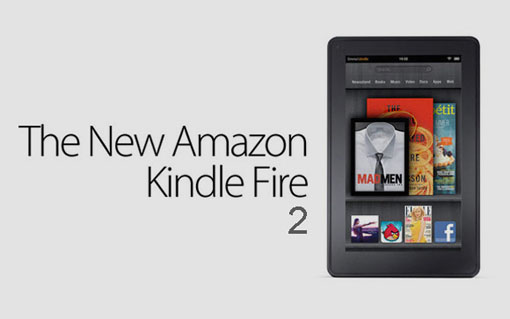
Looking forward to see some really great product in next version of Amazon Kindle Fire 2 or whatever it will be called. I guess it was really smart move from Amazon to halt production of current Kindle version as Google came up in similar price range slightly better tablet. So there was no reason for them to sell it for deeper loss. On top of that, it would have been slow sale hurting reputation of Kindle fire as top seller on their amazon site. For customers, there is no reason to buy Kindle Fire when Google's Nexus 7 is already out with much better feature set and similar price range..

Now question is, where will Amazon go with kindle fire 2. It has to be better than Nexus 7. They have few options left. Fire2 has to have better Webcam/Camera.. ideally both of them.. then resolution has to be close to Retina display.. Processor.. memory.. yada yada.. everything has to be better than nexus while price remains same.. or they can come with larger form factor version as well but then they hit iPad competition. I wish they will come up with 9 or 10 inch version with real good competitive iPad features as Samsung is more or less distance second player right now and seems to be focusing more on phone and larger phone segment. 

I really wish that there is some good competitor for iPad and will set higher bar for Apple to either further innovate or open iPad or cut down some prices.. Till Apple get hits on their tablet market share of 70% or more, they are not going to budge anytime soon. Not that I don't like iPad or have anything against it.. But still it could be even better and hopefully even more open..

I may go for Fire2 this time to test it out.. Most of the feedback I heard about Fire so far.. everyone seems to be happy with Graphic rendering, UI and smoothness which is one of the forte of iDevices.. Hope to have larger form factor from Amazon this time..


Kindle Fire tablet sold out as Amazon readies update


New model faces competition from Google’s Nexus 7


By Peter Svensson


Associated Press


NEW YORK —Amazon. com says it has sold out of its Kindle Fire tablet computer amid expectations of a new model for the holiday
 season.The Internet retailer has a major news conference scheduled for next Thursday in Santa Monica. It’s widely expected to reveal a new model of the Fire there, so Thursday’s announcement that the first model is “sold out” suggests that Amazon halted production a while ago to retool for a new model. Amazon launched the $199 tablet in November. It was the first Kindle with a color screen and the ability to run third-party applications, placing it in competition with Apple’s iPad, at half the price of the cheapest iPad.

Amazon doesn’t say how many Fires it has sold, but says it captured 22 percent of U.S. tablet sales over nine months. That would make it the secondmost- popular tablet, after the iPad. Tom Mainelli at research firm IDC said that figure matches his estimate of 6.7 million Fires sold, all
 in the U.S. The Fire, which is about half the size of the iPad, could face a tougher challenge this holiday season. Many analysts expect Apple to introduce a smaller, cheaper iPad to take on the threat of the Kindle Fire and reach buyers who can’t afford a full-size iPad. In addition, Google just launched its own Kindle-size tablet, the Nexus 7, and is selling it for $199.

Amazon kept the price of the Kindle Fire low by keeping it small, stripping it of features and taking a small or zero profit margin. Its strategy is to make the Fire a means for people to buy more e-books, music and movie downloads from the Amazon store, which is intimately linked to the device. That’s a contrast to the strategy of Apple, which sees content sales as a sideline and wants to make a profit on every device sold.

Apple has sold more than 84 million iPads since its debut in 2010, contributing to strong quarterly earnings and a market valuation that has exceeded $625 billion — the highest ever for a public company. The
 iPad 2, released in March 2011, sells for $399. The newest models, out in March, sell for $499 to $829, depending on the amount of storage and wireless capabilities.

Amazon itself was the main outlet for the Kindle Fire. Its website now directs customers to used Fires available from other merchants. Staples stores recently sold it for $179. It wasn’t immediately known whether some stores still had it on shelves.

Amazon could update the rest of its Kindle line at next week’s event, too. The current models were launched a year ago. In the intervening time, competitor Barnes & Noble has launched a Nook e-reader with a built-in screen illuminator for reading in the dark.

ABI Research said
 Thursday that sales of dedicated e-readers, like the non-Fire, black-and-white Kindles, peaked last year. It expects worldwide sales of e-readers at 11 million in 2012, down from 15 million in 2011.

The research firm expects tablets to outsell e-readers 9-1 this year, despite costing four or five time as much. Still, e-readers won’t go away completely, ABI analyst Joshua Flood said.

“We believe there will always be a niche market for the dedicated reading device for voracious readers, business travelers, and educational segments, particularly ones that are low-priced,” Flood said.

Shares of Amazon, which is based in Seattle, fell 90 cents, or 0.4 percent, to $246.22 Thursday.


MARK LENNIHAN/ASSOCIATED PRESS ARCHIVES

Half the size of the iPad, the Fire was the first Kindle tablet with a color screen and the ability to
 run third-party applications, at half the cheapest iPad’s price.

Thursday, August 16, 2012

Do we really need to make note on tablet?

I don't know about you guys.. but I can't really think of lot of use cases where I will take out my pen (digital pen with tablet) and make notes on my tablet's content.. I think it is yet another trick or I should say another effort by Samsung to try to differentiate with iPad. I hope it works and keeps up bar for Apple high so they continue to build better tablets instead of taking it easy..

Biggest advantage of Apple products in general is User Interface (UI). from rendering to ease of use to intuitiveness to simplicity.. to smoothness to... to.. to... I am real hardcore fan of their UI and will continue to so till I see something better.. which I am yet to see.. on top of it.. Apple's ecosystem and ease of using their devices with TV or otherwise as well are superb..

Let us see how Samsung's new Note does it.. It's price point is attractive.. just slightly below comparable iPad with promise of better processor power and memory.. I don't know if it also has retina display or its equivalent.. I am sure it  must be close..

I guess, Samsung should come up quickly into area of Digital Media Player like Apple TV and complete integration of their devices with HDTV and many more comparable features of Apple TV. Apple TV, once dark horse of Apple is slowly coming up and becoming household thing.. It extends most of the Apple products thru itunes media play.. If Samsung can't come up with good hardware then they should talk to Roku or someone established player in this field. Google's Apple TV equivalent was more or less flop with significant higher prices.. let us see.. what is next from Android side..

Let me know if you use Galaxy Note tablet and ifyou can compare it with iPad.. for now, I don't have any plans to buy it..


Newest Galaxy tablet has pen


By Youkyung Lee


Associated Press


SEOUL, South Korea — Samsung Electronics is taking another shot at the dominance of Apple’s iPad with a tablet equipped with a digital pen and a faster processor at the same
 price tag. The Wi-Fi-only version of the Galaxy Note 10.1 will go on sale in the U.S. on Thursday. The price starts at $499 for the basic model with 16 gigabytes of storage and $549 for the 32-gigabyte model, expandable with an external memory card. Apple’s latest iPad starts at the same price but the Note 10.1 offers some features that the iPad doesn’t have, while its screen resolution is lower than the iPad’s. It is Samsung’s first Android tablet equipped with a digital pen and can run two applications side-by-side on a screen divided in half. The split screen, made possible by the quad-core processor and 2 gigabytes of RAM, can be useful when taking notes while watching a video or surfing the Internet.

Analysts said this capability of the Note tablet is intended to attract business and education customers, a strategy that could be more effective than going all out against the iPad, which already dominates nearly 70 percent of the worldwide tablet market.

Samsung released about a half-dozen Android tablets in the past two years under the Galaxy Tab series but none of them has been as popular as the iPad. Analysts say Android tablets are less successful because of a dearth of applications
 and higher prices. But with the Note 10.1, the South Korean company believes it has a product that will find favor with corporations and schools despite the iPad’s rich pool of applications and sharper screen.

While Apple makes one new model for the iPhone and iPad every year to meet demand from all around the world, Samsung releases multiple mobile products with variations in prices, screen sizes, hardware and
 operating systems. This strategy helped Samsung edge pass Apple in smartphone sales but hasn’t paid off in the tablet area, probablybecauseSamsung’s previous tablets were not differentiated enough from the iPad. Samsung’s secondquarter market share in the global tablet market fell to 9 percent, while nearly seven out of 10 tablets in the market were emblazoned with Apple logo, according to IHS iSuppli.


MARK LENNIHAN/ASSOCIATED PRESS

Samsung's new Galaxy Note 10.1 goes on sale in the U.S. on Thursday, starting at $499 for the 16gigabyte model and $549 for the 32GB tablet.

Thursday, July 12, 2012

Bad news continues for Dell & HP

May be HP's exit from Tablet market was way to premature? I really can't come up with any really good strategy for HP and Dell to overcome this PC sales slump.. I guess, enterprise is only hope for them. Consumer market they need to focus on emerging markets where they are battered by Lenovo and Acer who have great hold there.. Still, both HP and Dell do hold some premium as compared to Lenovo and Acer in all markets. Though Lenovo is now a days more or less considered same or better than HP and Dell.

On high end there is Apple.. who is king on consumer side and now encroaching really fast into Enterprise with all the BYOD (Bring Your Own Device) etc... are catching up.. Still, HP/Dell has some time before they loose this ultra premium enterprise market as well.

What will be impact of this on other Giants like Intel and Microsoft.. Microsoft is trying to catch up big time in Tablet OS and market. If they are able to get some share of this pie.. they will be able to survive.. Best hope for Microsoft is Enterprise.. even though most of the executives and even middle management folks have iPad.. there are still many enterprises who are still totally into Managed Device mode and could give some chance to Microsoft to try out their tablet.. it better be good otherwise MS is gone..

Intel is still in better position.. They are benefiting from MAC Book Strategy.. Though, not sure, how long Apple with stick with them before going back to their own processor.. Also, Intel is trying hard to get into ARM type/equivalent processors.. they are left behind.. but this hardware market is so dynamic and without any customer loyalty.. Intel should be able to swing back into Tablet processors.. Though margin would be in pressure.. unless, they acquire some other market leader..

for now.. enjoy your PC/Laptop while it lasts!! On second thought.. they do look nice.. at least when they are new ;-) and as long as  you don't keep macbook next to them ;-)


COMPUTERS

PC sales tumble 6 to 11 percent in Q2


Personal computer sales in the U.S. sagged in the spring as shifting technology trends, upcoming product releases and a shaky economy dampened demand for the machines
 on the market. Separate reports released Wednesday by Gartner and IDC estimated the second-quarter decline ranged from 6 percent to 11 percent compared with the same time last year. Gartner provided the lower of the two figures in the research firms’ quarterly analysis of PC shipments.

Hewlett-Packard and Dell, the biggest PC makers in the U.S. market, suffered the sharpest drops.

Worldwide PC shipments held up better in the April-to-June period, dipping by just 0.1 percent from last year.

Consumers and businesses have been buying fewer PCs amid the growing popularity of smartphones
 and tablet computers such as the iPad. 

Tuesday, July 10, 2012

BAD Apple :-(

Will leaving EPEAT impact Apple? May be.. May be not.. This will be interesting.. let us see if people love design and form-factor or their mother nature.. I am sure Apple will come with some better explanation and may be better environment friendly option while they ditch EPEAT logo.

In short term, it is not making any difference. If you look into details, looks like, they knew that iPad/iPhone is not going to be approved which is one of the big business segment for them.. So why not ditch it completely.. May be plant some trees somewhere else to offset this logo?


GLUED-IN BATTERIES AT ISSUE

Uproar ripens as Apple turns less ‘green’


Tech leader’s pullout from registry of eco-friendly products spurs backlash


By Dana Hull and John Boudreau


Staff writers


After establishing itself as an environmental leader among consumer electronics companies, Apple’s abrupt withdrawal from a
 prominent “green” product registry has set off a furor in the blogosphere and could modestly cut into the company’s computer sales.

Apple’s decision may be tied to the design of the new Mac-Book Pros, which have batteries glued into the case and can’t be disassembled for recycling — a violation of the green certification standards of EPEAT, a nonprofit
 product rating group backed by many manufacturers and the U.S. Environmental Protection Agency.
“I’ve had some conversations, and Apple has said that their design direction is not compatible with EPEAT standards,” the group’s CEO, Robert Frisbee, in an interview Monday. “It’s kind of odd since they've helped design” the standards. 


Greenpeace spokesman Casey Harrell said Apple “has pitted design against the environment — and chosen design. They’re making a big bet that people don’t care, but recycling is a big issue.” 

Harrell described the Cupertino company’s withdrawal from EPEAT as “unfortunate,” noting that Apple in the past has introduced eco-friendly design features such as using aluminum instead of plastic in the casings of their products, which makes recycling easier. 

Apple has often boasted that its computers and laptops achieve “gold ratings” from EPEAT on its environmental reports. It’s withdrawal will eliminate numerous products — 39 laptops, desktop computers and monitors — from the well-known green registry. 

Apple’s decision has flummoxed cities like San Francisco, which can no longer buy Apple computers because its procurement rules require EPEAT approval. 

“I don’t know why Apple would choose to go this route. It’s really bad for EPEAT, and it’s really bad for anyone trying to do green purchasing,” said Chris Geiger, the city of San Francisco’s toxics reduction coordinator. “We strongly believe that eco-labels are essential for green purchasing, and Apple just withdrew from the list. We want to register our displeasure and urge Apple to reconsider.” 

To meet EPEAT standards, products must be easy to disassemble into separate components by recyclers. Companies like Apple, Dell, Hewlett-Packard and Samsung have participated in developing the organization’s standards, and EPEAT’s registry of products has long been a green procurement guide of sorts for the federal government, cities, large corporations and colleges and universities. 

Apple has offered no explanation for why it would glue the batteries into the new MacBook Pros or in other ways make its products difficult to disassemble, but the company has a long history of designing products to discourage tinkering by their users. 

It notified EPEAT of its withdrawal in a letter Thursday, but didn’t elaborate on its reasons. An Apple representative Monday declined to comment, saying only that the company remains committed to the environment. 

Based in Portland, Ore., EPEAT is a nonprofit organization funded by major PC manufacturers and the EPA that awards electronic products a stamp of approval if they meet the group’s minimum requirements for energy efficiency, use of toxic materials and disposal. 

Apple was long criticized by Greenpeace and other groups for failing to eliminate hazardous materials from products. But it eventually became a leader among tech companies for eliminating toxic chemicals from its computers. Still, it has faced criticism from Greenpeace for allegedly being slow to abandon coalpowered energy for its everexpanding server farms. 

EPEAT standards do not currently cover smartphones or tablet computers, which represent a fastgrowing portion of Apple’s business. But standards for those products are being crafted, Frisbee said, hinting that Apple’s phenomenally successful iPad may not be in compliance. 

“There’s an issue with the cementing in of batteries on the iPad,” he said. “If you can’t separate the toxics from recyclables, it doesn’t qualify. Other manufacturers have been able to find ways to stay within the EPEAT requirements. It’s a little confusing as to why Apple, which has always been the leader, has chosen a different direction.” 

Barbara Kyle, the national coordinator of the Electronics TakeBack Coalition, a San Franciscobased group that promotes green design and recycling of electronics products, also wondered if Apple was withdrawing from EPEAT because its new products cannot be easily disassembled. 

“What does a recycler do? The first thing is they take apart the product to remove the hazardous stuff. They absolutely need to be able to open it up,” Kyle said. “If you can’t even take the battery out, or if you’ve glued in the battery with industrial strength glue, that is not designing with recycling in mind.” 

Gartner analyst Van Baker said Apple’s pullout from EPEAT will have little impact on its bottom line. He added that Apple has good “environmental credibility” for a consumer electronics company. 

“Let’s face it, the EPEAT label is pretty far down the purchase criteria list for most people,” Baker said. “I’m sure Apple will point to other things, such as the fact all the materials they use are free of any pollution.” 

Contact Dana Hull at 408920-2706. Follow her at Twitter.com/danahull.